


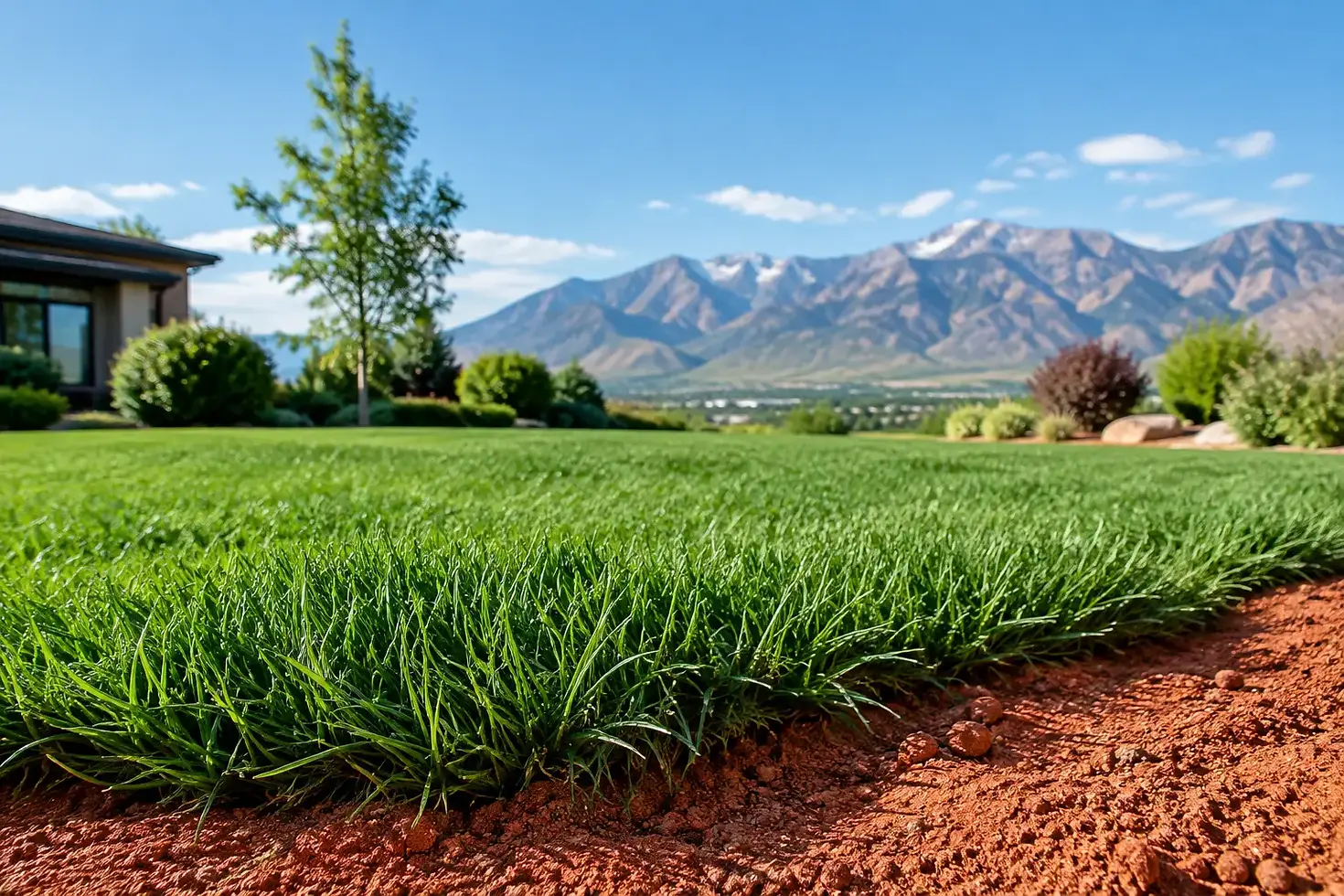
American Bluegrass Lawn Performance in Utah

A Utah lawn has to do more than look green for a real estate photo. It needs to handle hot afternoons, kids and dogs, neighborhood traffic, winter recovery, and the dry air that pulls moisture from every exposed surface. American Bluegrass lawn performance is about meeting those demands with dense, dark blue-green living cover that cools the yard, holds the soil, and gives families a lawn they can actually use.
American Bluegrass™ is a Kentucky bluegrass blend selected for rich color, soft texture, density, and dependable recovery. It is not a decorative afterthought. Properly established bluegrass creates a functional outdoor surface for homes, parks, HOAs, and commercial properties across Utah.
What American Bluegrass Lawn Performance Looks Like
The first thing most people notice is color. American Bluegrass has a deep blue-green appearance that gives a property a finished, cared-for look. That color matters to curb appeal, but the performance behind it matters more. A dense lawn shades the soil, cushions footsteps, and competes against open spaces where weeds can get started.
Kentucky bluegrass is also known for its ability to spread and repair through underground stems called rhizomes. When normal use creates a thin spot, a healthy bluegrass lawn can gradually knit back together. That makes it a strong fit for family yards, common areas, and properties where a lawn needs to bounce back after regular activity.
Performance is never just one trait. A lawn can be dark green but thin, soft but weak, or drought-conscious but unable to recover from use. American Bluegrass is chosen for the balance: fine-to-medium texture underfoot, dense coverage, rich color, and a root system that supports a durable surface when it receives sensible care.
Why Living Cover Performs Better in Utah Heat
Utah homeowners hear plenty about reducing water use, and that is a reasonable goal. The mistake is treating every gallon that touches a lawn as water lost forever. Water taken up by living plants is not simply used up. Through evapotranspiration, or ET, grass moves much of that moisture back into the air, often within days to weeks.
That process is part of the local rain cycle. Moisture leaves the leaf surface, cools the plant and surrounding air, and adds humidity that can help clouds and precipitation form when weather conditions line up. Grass is Utah's rainmaker. Keeping living cover on the ground helps water cycle instead of treating it as something that must be eliminated from the landscape.
A well-watered lawn can also be dramatically cooler than bare soil, rock-heavy ground cover, and pavement. Surface temperatures can be 10 to 16 degrees Celsius lower. That difference is easy to feel when a child sits on the lawn, a dog crosses the yard, or a crew works around a property on a July afternoon.
Rock and bare soil have a place in a well-designed landscape, especially in low-use planting zones. But they absorb and radiate heat. Pavement does the same. A functional lawn belongs where people walk, play, gather, and need cooling. The right question is not whether every square foot should be planted. It is whether a usable space should be covered with a living system that cools, filters, and recycles water.
Dense Roots, Better Infiltration, Less Runoff
American Bluegrass lawn performance starts below the surface as much as above it. Dense turf roots create pathways in the upper soil profile. When irrigation or rain arrives, water has more opportunity to enter the shallow root zone rather than rushing across compacted ground toward a curb, drain, or low spot.
That does not mean a lawn can solve every drainage issue. Heavy clay, poor grading, frozen ground, and intense storms can overwhelm any landscape. But healthy living cover slows runoff, limits soil erosion, and helps keep moisture where plants can use it. Shallow, dense roots recycle moisture quickly. They are part of the system that makes a yard more comfortable and more useful.
The soil beneath the sod matters, too. All American Sod grows its premium sod in naturally occurring Ferrozite, an iron-rich, nutrient-dense silt loam soil. That growing environment supports strong establishment and the deeper color homeowners expect from a premium bluegrass lawn. Fresh-cut sod arrives with an established root zone and mature plant material, giving a project a faster start than seed alone.
Where Bluegrass Is the Right Choice
American Bluegrass is a smart choice when the priority is a traditional, lush Utah lawn with strong visual impact and a comfortable feel. It works especially well for front yards, backyard gathering spaces, play areas, community landscapes, and properties where a dark, uniform green surface is part of the goal.
It does need management. Bluegrass is not a no-water, no-mow plant, particularly during a hot, dry Utah summer. If a site has very limited irrigation, intense reflected heat, or an owner who wants a taller, more drought-forgiving grass type, turf-type tall fescue may be the better fit. Good lawn planning is not about forcing one product into every site. It is about matching the grass to the use, exposure, irrigation plan, and expectations.
For a bluegrass lawn, the payoff is density, softness, recovery, and a classic finish that is hard to duplicate with hardscape alone. On a property built for daily use, those traits are not cosmetic extras. They are performance features.
How to Get the Best Performance After Installation
Fresh sod needs immediate attention in its first weeks. The goal is simple: keep the sod and the soil beneath it consistently moist while roots connect to the prepared ground. Water should soak through the sod and into the root zone, not just dampen the leaf blades. Lift a corner after watering to check that moisture has reached the soil below.
During the establishment period, frequent light-to-moderate watering may be needed in warm weather. As rooting improves, shift toward deeper, less frequent irrigation. This encourages roots to follow moisture down rather than staying dependent on a constantly wet surface. Adjust for heat, wind, shade, soil type, and local watering guidance. There is no honest one-size-fits-all timer schedule for every Utah yard.
Mow only after the sod has begun rooting in. Keep the mower blade sharp and avoid removing more than one-third of the leaf blade in a single cut. Bluegrass generally looks and performs best when it is not scalped. A slightly higher mowing height helps shade the soil, protect crowns, and reduce stress during summer heat.
Avoid heavy traffic until the sod has anchored. Kids, pets, and outdoor furniture can return soon enough, but giving roots time to connect is one of the easiest ways to protect your investment. If seams begin to dry, water them promptly. If an edge lifts, press it firmly into moist soil.
The Practical Case for a Bluegrass Lawn
A lawn should earn its place. American Bluegrass earns it by providing a cool, soft, durable surface that people use every day. It supports the water cycle through ET, reduces hot exposed ground, helps slow runoff, and gives a property a deep green finish that feels alive rather than sterile.
For homeowners and project teams, the best result starts with a clear plan for use, irrigation, and installation timing. A well-prepared site and fresh-cut sod can turn bare dirt into a working landscape quickly. For help choosing American Bluegrass for a Utah home, HOA, commercial property, or landscape project, call All American Sod at 801-227-7800. The right living cover does more than fill a yard. It gives that yard a job worth doing.


Comments