


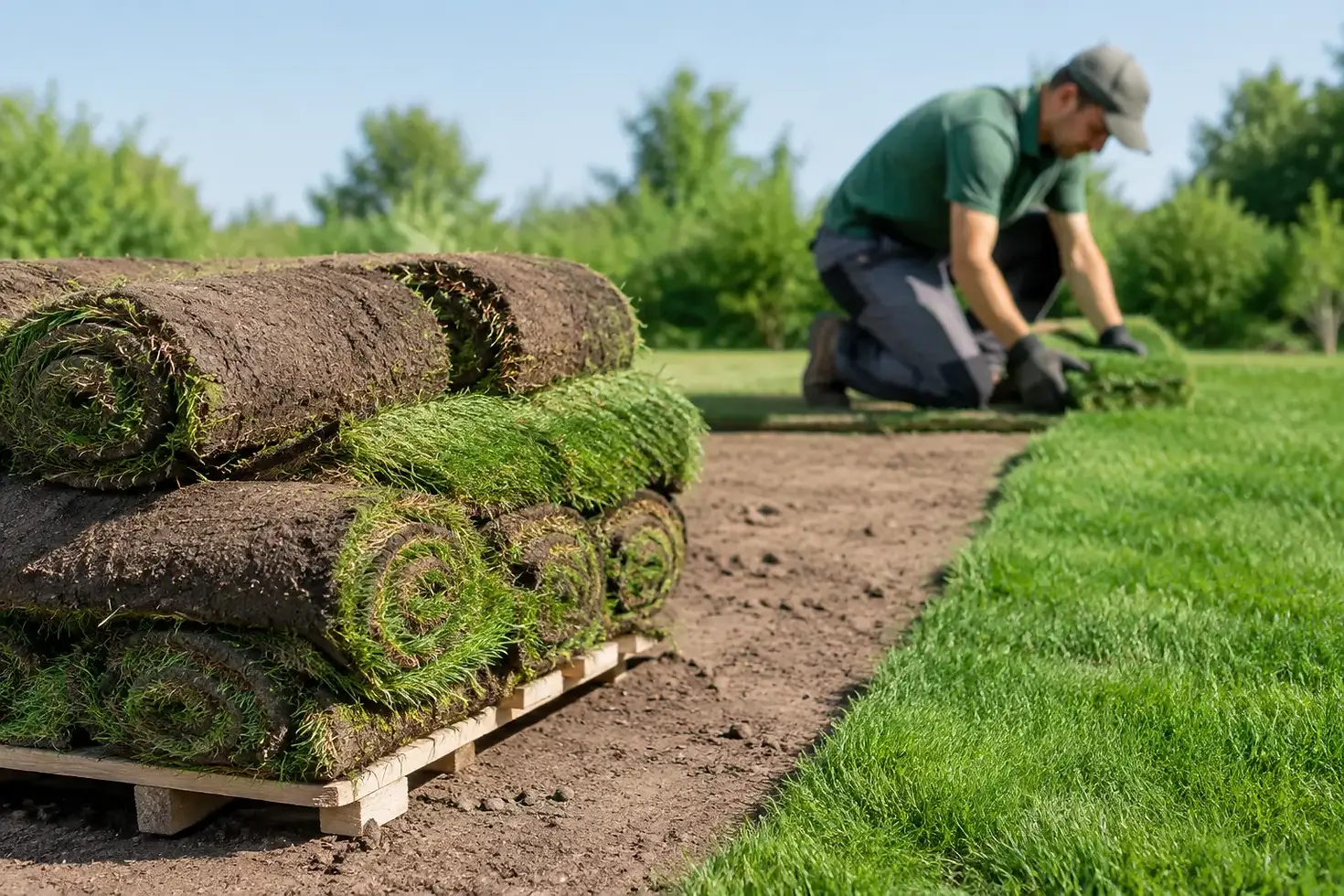
Landscaper Sod Ordering Tips That Prevent Waste

A sod order can go wrong before the first pallet arrives. A missed side yard, an unprepared irrigation zone, or a delivery scheduled before the crew is ready can turn fresh-cut living cover into waste. These landscaper sod ordering tips help Utah contractors and property owners order with confidence, protect the root zone, and get a lawn working quickly.
Living grass is more than a finish material. It cools hot ground, slows runoff, and returns moisture to the air through evapotranspiration, or ET. Water taken up by the plant is not simply used up. Much of it moves back into the air over days and weeks, helping create the cooler, more humid conditions that support Utah's local rain cycle. Order the right sod, install it promptly, and give it the start it needs.
Start With an Accurate Takeoff
The fastest way to overorder is measuring only the obvious open lawn. The fastest way to come up short is forgetting the narrow strips along walks, park strips, side gates, islands, and curved bed lines. Measure each distinct area in square feet, then add the areas together before choosing a variety or delivery date.
For rectangles, multiply length by width. For circles, multiply the radius squared by 3.14. Curved or irregular spaces are best divided into smaller rectangles, triangles, or circles. A scaled site plan is useful on larger commercial work, but a careful field measurement still catches grade changes, utility boxes, tree rings, and bed adjustments that drawings may miss.
A modest waste factor makes sense when a design has curves, angled borders, or many obstacles. A simple, square backyard needs less extra material than a front entry with sweeping landscape beds. Do not use a big blanket percentage just because it feels safe. Extra pallets cost money, require water, and can leave you scrambling to find a place for sod that should have been installed fresh.
Order by the supplier's stated coverage per roll or pallet, not by a number from a past job. Roll dimensions and pallet coverage can vary. Confirm the total square footage, number of pallets, unloading access, and whether the job has separate phases.
Choose Sod for the Site, Not the Sales Sheet
Utah lawns face intense sun, dry air, temperature swings, hard-working family spaces, and sometimes shallow or compacted soils. The best choice depends on the site and the customer's expectations.
American Bluegrass™ is a Kentucky bluegrass blend for customers who want a dark blue-green lawn with a soft, dense feel. It is a strong fit for many residential yards, play areas, and polished commercial landscapes where uniform color and classic lawn texture matter.
American Oasis™ is a turf-type tall fescue blend selected for drought tolerance, deep roots, rich color, and a uniform appearance. It can be a smart option for properties looking for a resilient lawn with a more water-wise root system, particularly where summer heat and irrigation efficiency are part of the conversation.
Neither choice removes the need for correct irrigation and good soil preparation. Variety helps, but a lawn's long-term performance still comes down to root contact, watering, mowing, and whether the property has enough living cover to do its job. For exposed south- or west-facing areas, discuss heat, traffic, shade, and sprinkler coverage before the order is placed.
Schedule Delivery Around Installation Capacity
Fresh-cut sod is perishable. The goal is simple: have the ground ready, the crew on site, and water available when the load arrives. Do not schedule delivery based only on the day a crew might be free.
Confirm the installation sequence first. The site should be graded, debris-free, and accessible. Irrigation repairs and head adjustments should be complete. Finish grade should account for the thickness of the sod so the lawn meets walks and curbs cleanly instead of sitting too high.
Delivery timing matters especially on warm, windy Utah days. Sod stacked on a pallet can heat up if it waits too long. A morning delivery may be the right call for a crew that can install immediately. For a larger project, staged deliveries can protect quality better than receiving more material than the crew can lay and water in one day.
Tell the supplier where the truck can safely unload. Note narrow streets, gated communities, steep drives, overhead branches, construction traffic, and areas where pallets cannot block access. A few minutes of delivery planning can save a crew hours of moving rolls across a jobsite.
Check the Forecast, But Do Not Chase Perfect Weather
Weather changes plans, but it should not create paralysis. Avoid installing on frozen ground or into standing water. During heat, prepare for faster watering and get rolls down without delay. During rain, protect the prepared soil from compaction and avoid working it when it turns muddy.
Wind is often the overlooked issue. It can dry exposed edges quickly, particularly on newly laid sod before roots have knit into the soil. If a windy afternoon is expected, make sure the crew has enough labor and water to finish and soak the area that same day.
Prepare the Root Zone Before the Truck Arrives
Sod cannot correct a bad base underneath it. It will reflect drainage problems, compaction, low spots, poor grade, and uneven irrigation. A beautiful pallet laid over hard, rutted ground may look good for a week, then show the consequences later.
Remove construction debris, rocks, old roots, and weeds. Grade the soil so water moves away from structures without racing off the property. Loosen compacted areas where practical, then firm and smooth the surface enough to prevent footprints and low spots. The final surface should be even, not fluffy.
At All American Sod Farm, sod is grown in naturally occurring Ferrozite soil, an iron-rich, nutrient-dense silt loam that supports strong establishment and deep green color. That quality is an advantage, but it still needs close contact with the prepared native soil. Avoid leaving air pockets below the rolls. After installation, a light rolling can help settle sod into the soil where conditions allow.
Before delivery, run every irrigation zone. Look for blocked heads, dry wedges, overspray on pavement, and zones that fail to overlap. New sod needs even moisture across the whole installation. One weak sprinkler head can create a brown patch long before the rest of the lawn shows stress.
Install for Tight Seams and Fast Rooting
Lay the first row along a straight edge such as a driveway, curb, or patio. Stagger seams like brickwork rather than lining them up across the lawn. Butt the edges together tightly, but do not stretch the rolls. Stretching creates gaps as the sod settles.
Use full pieces around the perimeter when possible. Small strips dry out faster and are more likely to pull apart. On slopes, run sod across the slope rather than straight downhill when the layout allows, and secure steep areas if needed until rooting begins.
Water is not a final step. It is part of installation. Begin watering newly installed areas as they are completed, then make sure moisture reaches the soil beneath the sod. The surface can look wet while the root zone stays dry, so lift a corner in a few places to check.
For the first couple of weeks, keep the sod and its underlying soil consistently moist without turning the site into a swamp. As roots begin to hold, shift gradually toward deeper, less frequent watering. That encourages roots to move down instead of staying at the surface.
Order Enough Support, Not Just Enough Sod
A clean order includes more than square footage. It includes a realistic plan for labor, irrigation, access, and follow-up. On a builder or HOA project, coordinate sod installation after heavy equipment is done, not before. On a homeowner job, make sure pets, gates, furniture, and weekend plans will not interfere with the first days of watering.
Grass helps keep living cover on the ground. Its dense, shallow root system slows surface runoff and supports shallow infiltration, while ET returns moisture to the air quickly. Compared with bare soil, rock-heavy landscapes, or pavement, a healthy lawn also cools the ground dramatically - often by 10 to 16°C. That cooling makes outdoor spaces more usable and supports the Grow the Rain Flow approach: keep water cycling rather than letting it run sideways or disappear deep below the root zone.
If your takeoff, variety selection, or delivery plan needs a second set of eyes, call All American Sod Farm at 801-227-7800. A well-planned sod order gives the crew a better install day, gives the customer a faster path to a usable lawn, and gives Utah another patch of living ground ready to cool, grow, and cycle water.


Comments