


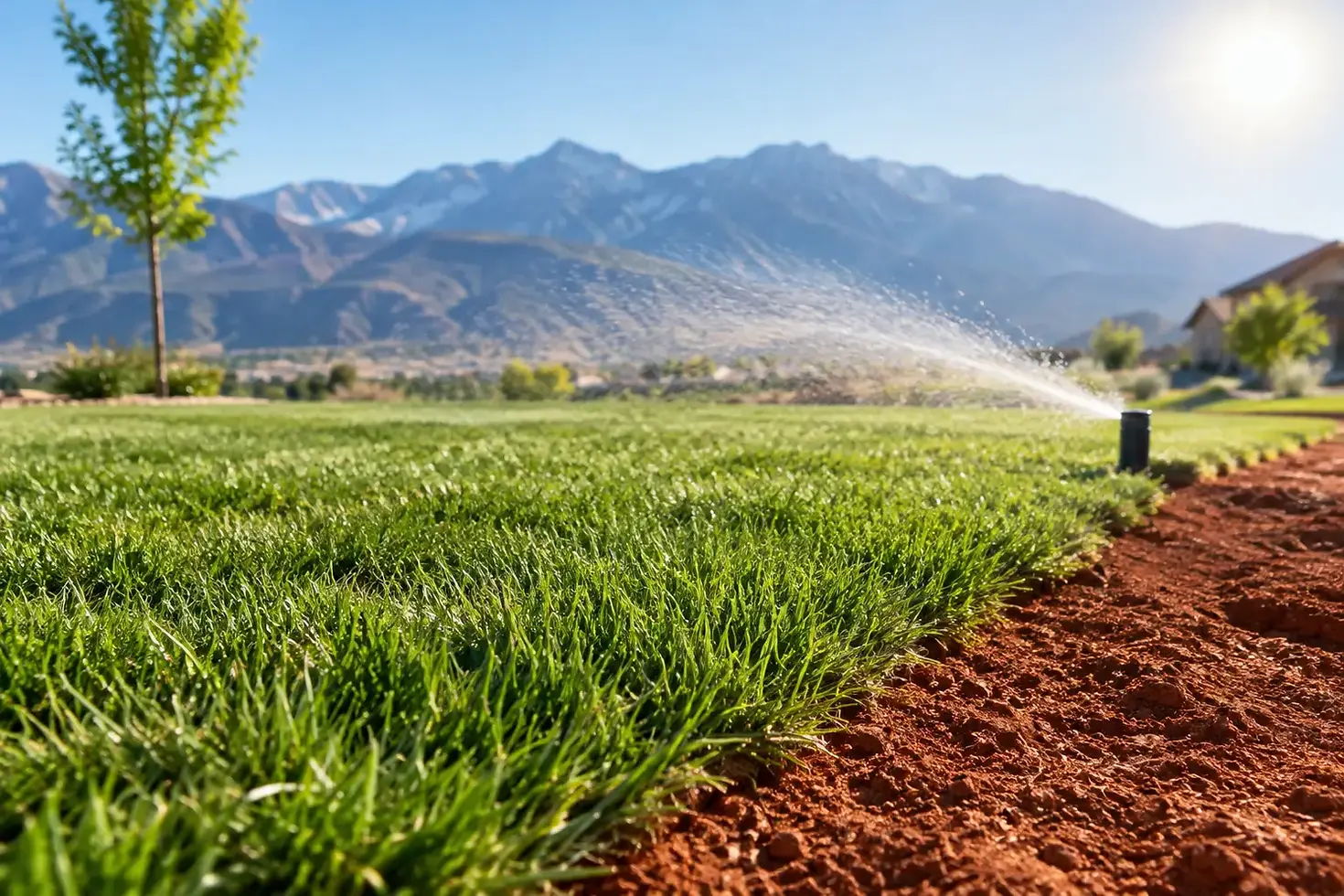
How to Prevent Sod Drying During Utah Heat

Living grass does more than make a property look finished. Its roots slow runoff, support shallow infiltration, and move water back into the air through evapotranspiration. That moisture is not simply gone. It helps cool the surrounding air and can return to the local water cycle in days or weeks. Knowing how to prevent sod drying protects that function while giving your family, pets, and guests a cooler, usable lawn through a Utah summer.
Fresh-cut sod has an immediate job: grow roots into the soil below it before heat and wind pull too much moisture from the leaf blades and root zone. A lawn can look perfect when it is installed and still struggle a day later if irrigation, soil contact, or site conditions are off. The good news is that most drying problems are preventable when the first two to three weeks are handled with purpose.
How to Prevent Sod Drying Starts Before Delivery
The best time to prevent dry sod is before the pallet arrives. Fresh sod is a living product, not a building material to leave stacked in the driveway for the weekend. Install it as soon as possible, ideally the same day it is delivered or picked up. If a short delay is unavoidable, keep rolls or pieces shaded and cool, but do not rely on shade as a substitute for installation and watering.
Prepare the soil before the sod is on site. Remove construction debris, persistent weeds, and loose rocks. Grade the area so water will not race off slopes or collect in low spots, then loosen compacted soil where needed. A firm, smooth surface is the goal. Sod needs close contact with moist soil to send out new roots. Air gaps underneath allow the sod layer to dry quickly, even when the surface appears wet.
In Utah, clay-heavy soil and newly built lots often create a compaction problem. Water may puddle on top while roots below remain dry and oxygen-starved. Correcting grade and compaction before installation saves water and reduces the risk of weak establishment later.
Water the Soil, Then Water the Sod
Pre-moisten the prepared soil immediately before installation. The ground should be damp several inches down, not muddy. Starting with dry soil is one of the fastest ways to pull moisture out of fresh sod, especially on hot, windy afternoons.
Once sod is laid, water it right away. The first irrigation should soak through the sod and into the soil beneath it. Lift a corner in several places after watering. The underside of the sod and the top inch or two of native soil should be moist. If the sod is wet on top but dry underneath, the water has not done its job yet.
For the first 7 to 14 days, water frequently enough to keep the new root zone consistently moist. During extreme Utah heat, that may mean a light additional watering in the afternoon for exposed areas. This is not a permanent schedule. It is short-term establishment care for a shallow root system that has not yet connected to the soil below.
Early morning should provide the main watering. It wets the root zone before temperatures rise and reduces prolonged nighttime leaf wetness. A brief midday check can be useful during heat, wind, or low humidity, particularly on south-facing slopes, park strips, and areas next to concrete. If blades begin folding, turning dull blue-gray, or feeling crisp at the tips, check soil moisture before assuming the sprinkler schedule is sufficient.
After roots begin to anchor, gradually shift from frequent shallow irrigation to deeper, less frequent watering. That transition encourages roots to move down instead of remaining near the surface. The exact timing depends on weather, soil texture, sun exposure, and the grass variety. Pull gently on a corner after about a week. Resistance is a good sign that rooting has begun.
Watch the Edges, Slopes, and Heat Traps
Not every part of a new lawn dries at the same rate. Sod along sidewalks, driveways, foundations, retaining walls, and south- or west-facing exposures often needs closer attention. Hard surfaces absorb and release heat, while reflected light can intensify stress. Slopes shed water faster than level ground, and narrow strips are easy for irrigation systems to miss.
Check these areas by hand rather than trusting a timer. Push a screwdriver or soil probe through the sod and into the soil. If it meets dry, hard resistance within an inch or two, increase run time or adjust coverage. If water is running down the curb or pooling, reduce the rate and use cycle-and-soak watering instead. Apply water in shorter cycles with time between them so it can infiltrate rather than flow away.
A properly established lawn helps keep soil in place and reduces wasteful horizontal runoff. Bare, dry soil does the opposite. It crusts, sheds water, warms quickly, and gives weeds an opening to establish.
Do Not Let Mowing Add Stress
Do not mow new sod until it has rooted enough that a gentle tug meets resistance. When it is ready, use a sharp mower blade and avoid removing more than one-third of the leaf blade. Taller mowing during hot weather shades the soil, reduces moisture loss, and supports deeper roots.
Avoid heavy traffic during establishment. Children, pets, wheelbarrows, and lawn equipment can shift sod before roots have anchored it, breaking soil contact and creating dry seams. If an edge lifts or a gap appears, press it firmly back into place and water the area thoroughly.
Fertilizer also requires restraint. Fresh sod does not need a heavy dose of nitrogen as a rescue treatment for heat stress. Excess fertilizer can stimulate tender top growth before roots are ready to support it, and it can contribute to burn when conditions are dry. Soil preparation, correct watering, and rooting come first.
Brown Does Not Always Mean Dead
Homeowners recovering from drought damage should separate an established lawn problem from a fresh sod problem. Kentucky bluegrass can enter drought dormancy, turning tan or brown while crowns and roots remain alive. With improved moisture and cooler conditions, it may green up again. A lawn that is uniformly dormant but still firmly rooted may deserve time, especially as spring growth begins.
Prolonged drought, repeated heat stress, compacted soil, and weed invasion can cause permanent loss, though. Check several areas at ground level. Healthy crowns may show pale green tissue when gently parted, while dead grass pulls out easily and reveals dry, brittle crowns. Bare spots, thin areas packed with weeds, and ground that remains exposed after recovery efforts point to a different decision.
Repair makes sense when enough healthy grass remains to fill in and the underlying issue can be corrected. Replacement is often more practical when large areas have died, weeds have taken over, or the lawn has lost the density needed to compete. Dense living grass shades the soil and limits the light and open space weeds need to establish. Bare ground invites the opposite result.
For replacement areas, choose a grass suited to the site and your priorities. Kentucky bluegrass offers rich color, softness, and the ability to recover from many types of use. Turf-type tall fescue is a strong option where deeper roots and drought tolerance are priorities. The right choice depends on sun exposure, irrigation expectations, traffic, and whether you are repairing a portion of an existing lawn or starting over.
A Quick Response When Sod Starts to Dry
If newly installed sod begins to look gray-green, curled, or straw-colored, act promptly. First, inspect irrigation coverage and check beneath the sod. Then water deeply enough to moisten the underlying soil, paying special attention to seams, edges, and hot exposures. Correct lifted pieces and improve coverage before adding more watering time across the entire lawn.
Do not assume brown leaf tips mean the whole piece has failed. New sod can show temporary heat stress while roots are developing. If crowns remain alive and moisture reaches the root zone, recovery is possible. But repeated dry-downs in the first weeks can delay establishment and leave openings for weeds, so it is better to correct the cause immediately than wait for the color to worsen.
A healthy lawn is a working landscape. It cools the ground, holds soil, filters rainfall, and creates a comfortable place to live outside. If you need help evaluating drought damage, preparing a replacement area, or selecting fresh sod for your conditions, contact All American Sod at 801-227-7800. The right preparation and early care can turn a vulnerable new installation into a deeply rooted lawn built for Utah summers.


Comments