


Drought Damaged Lawn Recovery in Utah

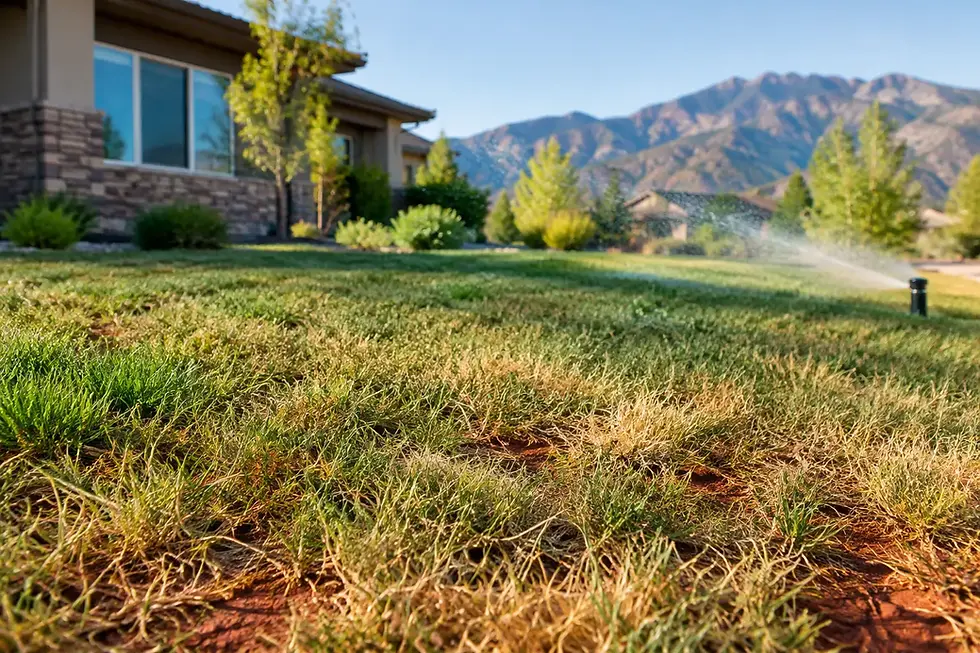
A brown Utah lawn is not always a dead lawn. During a hot, dry stretch, Kentucky bluegrass may go dormant to protect its crown, while tall fescue may thin out where soil gets hottest or irrigation coverage falls short. Smart drought damaged lawn recovery starts by finding out which one you have. Watering blindly, scalping the lawn, or fertilizing a severely stressed root zone can turn a recoverable lawn into a replacement project.
Living cover is worth recovering when it can be recovered. A healthy lawn cools the ground and the air around it, catches rainfall, slows runoff, and cycles moisture back into the atmosphere through evapotranspiration, or ET. The water a lawn takes up is not simply gone. Much of it is released back to the air through its leaves in days or weeks. That recycled humidity and cooling are part of Utah's rain flow.
Start Drought Damaged Lawn Recovery With a Crown Test
Before changing your watering schedule, inspect the grass crowns. The crown is the small growing point at the base of the plant, right at soil level. Pull apart a few brown spots and look closely. If the crowns are firm and pale green or white inside, the lawn is likely dormant or stressed, not dead. If they are dry, brittle, brown all the way through, and pull out with no roots attached, those areas may need repair.
Check several places, not just one. South-facing slopes, edges next to driveways, narrow strips by pavement, and areas under reflected heat often fail first. A lawn can be alive in the center and badly stressed around the perimeter because those zones run hotter and dry faster.
Also check the soil. Push a screwdriver or soil probe down after irrigation. If it stops after an inch or two, compaction or dry, hard soil may be keeping water near the surface. If the soil is wet several inches down but the lawn still looks dry, inspect sprinkler coverage and look for disease, grubs, or damaged roots instead of adding more water.
Restore Moisture in the Root Zone, Not Just the Surface
Recovery irrigation should be deliberate. The goal is to re-wet the active root zone without creating runoff. Begin with a slow, thorough watering early in the morning, then check how deeply moisture moved. Most established lawns recover better from less-frequent, deeper watering than from quick daily sprinkles that keep roots shallow.
Hard, dry Utah soil sometimes sheds water at first. In that case, use cycle-and-soak watering. Run the zone for a shorter period, let the water soak in for 30 to 60 minutes, then run it again. This gives water time to enter the soil rather than flow across it toward the street, a drain, or lower ground.
The exact schedule depends on weather, soil texture, slope, lawn variety, shade, and sprinkler output. A compacted clay soil needs a different approach than sandy soil. Instead of copying a neighbor's timer setting, measure your system with straight-sided containers placed around the zone. Uneven catch amounts tell you that nozzle choice, pressure, spacing, or a blocked head may be the actual problem.
Water before the heat builds. Midday watering is not forbidden, but more water is lost to wind and evaporation before it reaches the roots. Evening watering can work when needed, but regularly leaving leaves wet overnight can invite disease. Morning gives the lawn a chance to dry while still sending water down where recovery happens.
Mow High and Keep the Lawn Out of Further Stress
A drought-stressed lawn does not need a close haircut. Raise the mower height and follow the one-third rule: never remove more than one-third of the blade at a time. Taller leaf blades shade the soil, reduce surface heat, and give the plant more leaf area to make energy for root recovery.
Use a sharp mower blade. Dull blades tear leaf tips and leave a tan, ragged look that can make a lawn appear worse than it is. Leave short clippings on the lawn when practical. They return small amounts of organic matter and nutrients without forming a damaging thatch layer.
Hold off on aggressive dethatching, heavy aeration, and weed control while the lawn is severely stressed. Those jobs can be useful at the right time, especially aeration on compacted ground, but recovery comes first. Once the lawn is actively growing again and the soil has proper moisture, a core aeration can improve air movement, shallow infiltration, and root growth.
Fertilize Only After Growth Returns
Fertilizer is not a substitute for water. Applying a strong nitrogen treatment to a brown, thirsty lawn can push tender top growth when roots are still struggling. Wait until you see consistent green growth after irrigation has corrected the moisture problem.
Then use a measured, season-appropriate application based on your soil and grass type. Utah soils can vary widely, and a soil test is the best way to avoid guessing. Iron can improve color where iron is limiting, but it will not fix dead crowns, poor sprinkler coverage, compacted soil, or a root zone that never receives enough water.
All American Sod grows in Ferrozite, an iron-rich silt loam that helps fresh-cut sod establish with strong color and a healthier root zone. For an established lawn, however, the practical lesson is simple: feed the soil and roots based on what they need, not on a calendar alone.
When to Repair Thin Areas and When to Replace Them
Give a dormant lawn time. With steady root-zone moisture, many bluegrass lawns begin showing new green growth within a couple of weeks, though full fill-in can take longer. If a section remains bare after recovery watering, clear away dead material and determine why it failed before reseeding or laying new sod.
Small thin areas may respond well to overseeding at the proper season. Keep seed consistently moist until it germinates, then gradually shift to deeper watering as roots develop. Larger dead patches, badly uneven areas, or lawns with failed irrigation often call for a more dependable reset with fresh sod.
For Utah properties that need stronger drought performance, turf-type tall fescue offers deeper roots and a more resilient response to heat when it is properly watered. American Oasis is built around that advantage. For homeowners who want the dense, soft, dark blue-green look of Kentucky bluegrass, American Bluegrass can be an excellent fit when the irrigation system and site conditions support it. The best choice is not one-size-fits-all. It depends on sun, traffic, soil, watering capacity, and the look you want from the lawn.
Fix the Heat Problem Around the Lawn
Repeated drought damage often begins at the edges. Pavement, rock-heavy beds, bare soil, and south-facing walls absorb heat and radiate it back into nearby plants. Living cover changes that equation. A healthy lawn can be 10 to 16°C cooler at the surface than bare soil or rock-heavy ground, and it cools the air nearby through ET.
That does not mean every property needs wall-to-wall lawn. Utah landscapes work best when each area has a job. Put living grass where families play, pets run, people gather, and cooling matters. Use trees, shrubs, and well-chosen planting beds to add shade and habitat. Keep irrigation zones matched to plant needs. The goal is functional water cycling, not waste.
Dense grass also slows the sideways rush of stormwater. Its canopy softens the impact of rain, and its root zone encourages shallow infiltration. Some of that water is stored near the surface, used by plants, and returned to the air. That is how grass helps Grow the Rain Flow instead of letting water race away across hard ground.
A Recovery Plan That Holds Up Next Summer
Once the lawn is green again, walk it during an irrigation cycle. Watch for dry arcs, overspray on pavement, leaking valves, and zones that begin runoff before the soil is wet. Correcting those details is usually cheaper than repeatedly repairing drought damage.
Keep mowing high through summer, aerate compacted areas when the lawn is healthy enough, and inspect the root zone before adjusting the timer. Most of all, do not mistake a temporary brown spell for proof that living cover does not belong in Utah. A well-managed lawn is a working part of the landscape: cooler underfoot, useful for people, and active in the local water cycle.
For help choosing replacement sod or planning a durable repair, call All American Sod at 801-227-7800. A good lawn recovery begins with an honest diagnosis, then gives the ground a living cover it can hold onto.


Comments