


Sod Delivery for Stronger Utah Lawns After Drought

A living lawn does more than make a property look cared for. It helps keep Utah neighborhoods cooler, slows runoff, protects soil, and puts moisture back into the air through evapotranspiration. That moisture is not simply gone. Grass draws water through its roots and releases it into the atmosphere over days and weeks, supporting the humidity and cooling that help local weather systems work. Thoughtful sod delivery gives homeowners a practical way to restore those benefits when drought, heat, weeds, and thinning turf have left a lawn struggling.
A healthy lawn can cool surface temperatures dramatically compared with exposed soil, gravel-heavy landscapes, and hardscapes. Its dense canopy shades the ground, while its roots open pathways for shallow infiltration instead of allowing water to race across the surface. That is why we say, “Grow the Rain Flow.” Functional grass is part of a working water cycle, not a break from it.
Start With an Honest Look at Lawn Damage
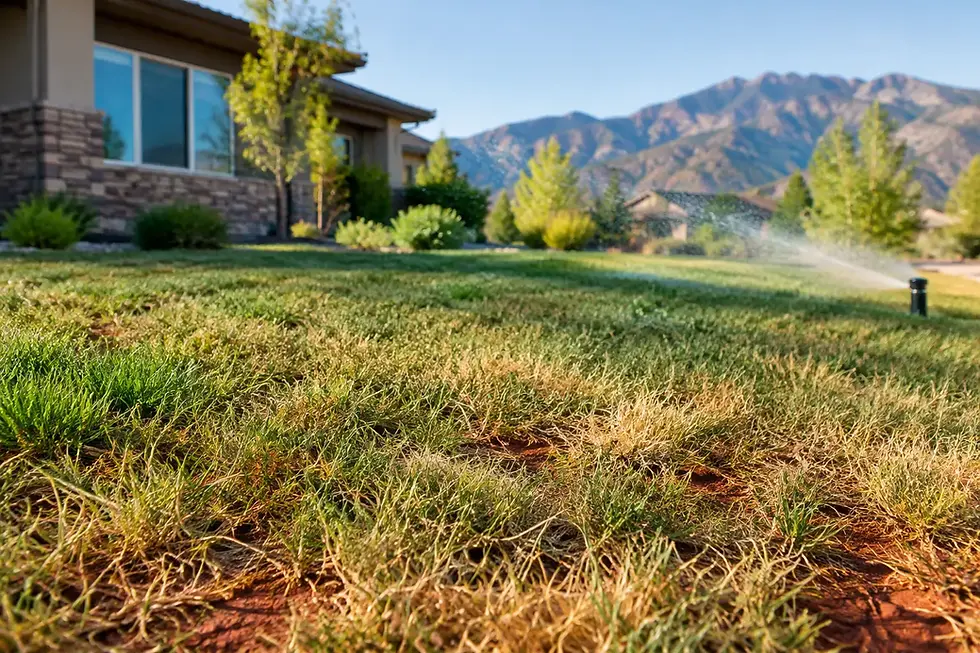
After a dry Utah summer, brown grass can look alarming. But brown does not always mean dead. Kentucky bluegrass, including many lawns planted across the Wasatch Front, has a natural drought-survival response called dormancy. When water becomes scarce, the blades turn brown and growth pauses while the plant conserves energy in the crown and root zone.
Dormant grass may recover when cooler temperatures and consistent moisture return. Before scheduling replacement, inspect several areas rather than judging the entire lawn from the street. Pull gently on a few brown plants. If the crowns remain firmly rooted and you can find green tissue at the base of the plant, there is still life worth protecting. A lawn with scattered brown areas but substantial healthy coverage may respond well to better irrigation, weed control, soil improvement, and overseeding.
Permanent drought damage looks different. Grass that pulls out easily, has dry and brittle crowns, or fails to show green growth after a reasonable period of proper watering may be lost. Severe thinning also gives weeds an opening. Once sunlight reaches bare soil, weed seeds can germinate quickly, compete for moisture, and turn a repair project into a season-long battle.
Waiting for spring green-up is often wise if damage happened late in the season and enough turf remains to evaluate. Spring reveals which areas survived winter and which parts need attention. Still, waiting is not always the best answer. If large sections are bare, weed-infested, uneven, or compacted, replacement can be more efficient than trying to rescue a lawn with too little healthy grass left to rebuild itself.
When Sod Delivery Is the Better Choice
Fresh sod is not the answer to every brown lawn. Repair is the right choice when the existing lawn has a strong foundation - enough living grass to fill in, manageable weed pressure, and soil that can accept water. In those cases, correcting the cause of decline matters more than replacing the surface.
Replacement becomes the practical choice when turf loss is widespread, weeds have taken over, or the lawn has become a patchwork of failing grass and exposed soil. New sod establishes a uniform surface quickly, helping homeowners regain a usable space for children, pets, gatherings, and everyday outdoor life. It also restores the dense plant cover that shades soil and competes with many weed seedlings before they gain a foothold.
For contractors, property managers, and builders, scheduled sod delivery also creates certainty. A project can move from prepared grade to finished green lawn in a day when materials arrive fresh, accessible, and matched to the installation schedule. That speed matters on new construction sites, commercial properties, and homes where bare ground creates dust, erosion, and curb-appeal concerns.
The key is to order only after the site is truly ready. Sod is a living, perishable product. It should be installed promptly after delivery, especially during warm weather. A pallet sitting too long in direct sun can heat up, stress the grass, and make establishment harder than it needs to be.
Choose Grass for the Way You Use the Lawn
The right variety depends on sunlight, irrigation expectations, traffic, and the appearance you want. American Bluegrass™ is a dark blue-green Kentucky bluegrass blend known for soft texture, classic lawn color, and the ability to recover from normal use. Like other Kentucky bluegrass lawns, it can enter dormancy during drought, which is a survival feature rather than an automatic sign of failure.
American Oasis™ is a turf-type tall fescue blend selected for deep rooting, uniform growth, rich color, and drought tolerance. It can be an excellent fit for homeowners who want a durable lawn and a grass type that naturally reaches deeper for moisture once established.
Neither choice removes the need for sound watering and soil preparation. Grass type affects how a lawn responds to stress, but the root zone determines how well it can use water, nutrients, and oxygen. Utah’s heat makes that foundation especially important.
Prepare the Ground Before the Truck Arrives
A beautiful sod installation begins below the green surface. Remove old dead material, persistent weeds, rocks, construction debris, and loose trash before new sod arrives. If weeds are extensive, address them before installation rather than covering the problem and hoping it disappears.
Next, evaluate the soil. Compacted ground sheds water and limits roots. Poor grading can leave high spots dry while low spots stay saturated. The finished soil grade should be smooth, firm enough to walk on without sinking, and roughly 1 inch below sidewalks, driveways, and other hard edges so the finished sod sits at the correct height.
All American Sod is grown in naturally occurring Ferrozite, an iron-rich, nutrient-dense silt loam soil that helps produce deep color, strong establishment, and resilient turf. Your home soil will not be identical to the soil attached to the sod, so the goal is to create good contact between the two. Lightly moisten the prepared ground before installation. It should be damp, not muddy.
Measure carefully before placing an order. Include the main lawn areas, then account for curves, corners, and cuts around landscape beds. A little extra material helps installers fit edges cleanly, but ordering far too much creates avoidable waste. Make sure the delivery area is clear, accessible, and close enough to the work zone that pallets can be unloaded without damaging vehicles, curbs, or finished landscaping.
Install Fast, Water Smart, and Build Roots
Lay sod tightly in a staggered pattern, much like brickwork, so seams do not line up in long channels. Butt edges together without stretching pieces or leaving gaps. On slopes, install pieces across the slope when possible and secure them if needed so they do not shift before roots knit into the soil.
Water should begin as installation progresses, not hours later. The objective during the first stage is to keep the sod and the soil directly beneath it consistently moist so new roots can cross the boundary. Lift a corner after watering to check. The underside of the sod and the prepared soil should both be moist.
Frequent, light watering can be useful in the first few days during hot, dry conditions, but it should not become the permanent pattern. As roots begin to establish, gradually water less often and more deeply. That encourages roots to move downward rather than staying at the surface. A shallow-rooted lawn dries out faster, while a developed root zone better handles heat, traffic, and normal irrigation intervals.
Avoid heavy foot traffic until the sod has rooted. Mow only when the grass is growing and the sod is firmly anchored, using a sharp mower blade and a sensible mowing height. Do not scalp a new lawn. Taller leaf blades provide more shading for the soil and more energy for root development.
Coordinate Delivery Around the Real Workday
The best delivery day is the day the crew, prepared ground, irrigation access, and installation tools are all ready. Homeowners should confirm gate widths, delivery access, pallet placement, and where sprinklers or hoses will reach before the truck arrives. Professionals should coordinate deliveries with grading, labor, and weather rather than treating sod as an item that can wait indefinitely on site.
Fresh-cut sod gives damaged landscapes a fast path back to dense color, cooler outdoor space, and functioning soil cover. But its lasting performance comes from the choices made before and after installation: an honest damage assessment, the right grass variety, prepared soil, and irrigation that trains roots to grow deep.
For help planning a delivery, choosing between American Bluegrass™ and American Oasis™, or deciding whether your lawn should be repaired or replaced, contact All American Sod at 801-227-7800. A stronger lawn starts with a sound plan, then grows into something your whole property can feel.


Comments