


Seed Versus Sod Establishment for Utah Lawns

A living lawn does more than make a yard look finished. Through evapotranspiration, grass moves water from the root zone back into the air, helping cool the ground and add humidity that supports local cloud formation. Dense, healthy grass also slows runoff and encourages shallow infiltration instead of letting water race across compacted or bare soil. That is why seed versus sod establishment is more than a question of price or speed. It is a decision about how quickly your property can regain cooling, soil protection, and a durable green surface after drought damage.
Utah homeowners have seen what heat, restricted irrigation, thinning turf, and weed pressure can do in a single season. The right choice depends on how much living grass remains, the condition of the soil, the season, and how soon you need usable lawn. Seed can be an excellent restoration tool. Fresh sod can be the practical answer when a lawn has lost too much ground to recover efficiently.
Seed Versus Sod Establishment: The Core Difference
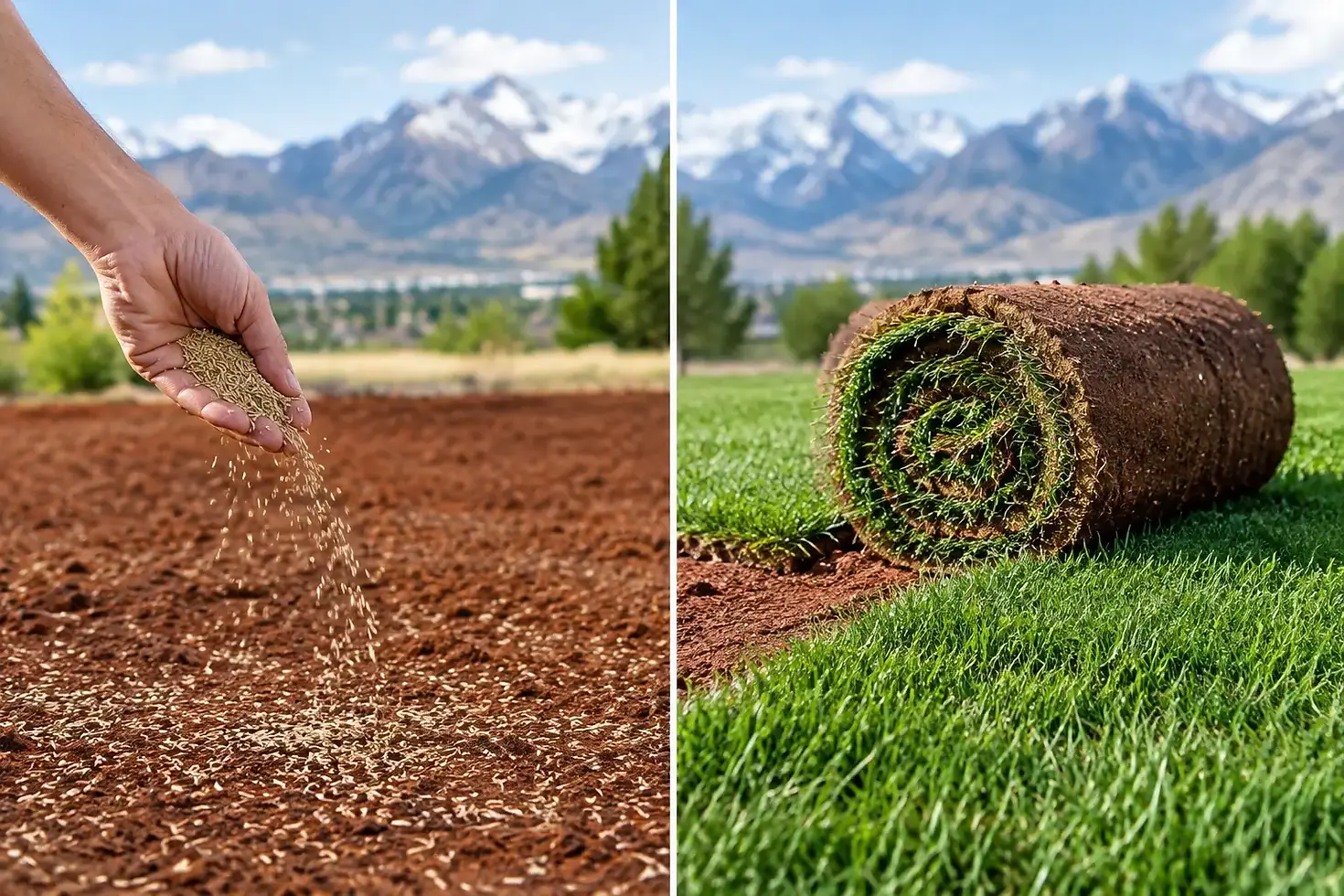
Seed establishment begins with germination. The seed must stay consistently moist, develop roots, emerge evenly, and survive competition from weeds and weather. It costs less upfront and gives grass the opportunity to grow from the beginning in the soil where it will live. But it takes patience, close irrigation management, and time before the lawn can handle children, pets, foot traffic, or a summer heat wave.
Sod establishment begins with mature grass that already has leaf area, density, and a developed root system within the sod layer. After installation, its roots must grow into the prepared native soil below. A newly sodded lawn is not instantly established, but it immediately covers the ground, reduces erosion, and delivers the appearance of a finished lawn while rooting in.
That visible coverage matters in Utah. Bare soil heats quickly, sheds water more readily, and gives windblown weed seed an open invitation. Natural grass can cool surface temperatures dramatically compared with bare ground, often by 10-16°C. The faster a lawn becomes dense and actively growing, the sooner it can provide those functional benefits.
First, Decide Whether the Existing Lawn Can Recover
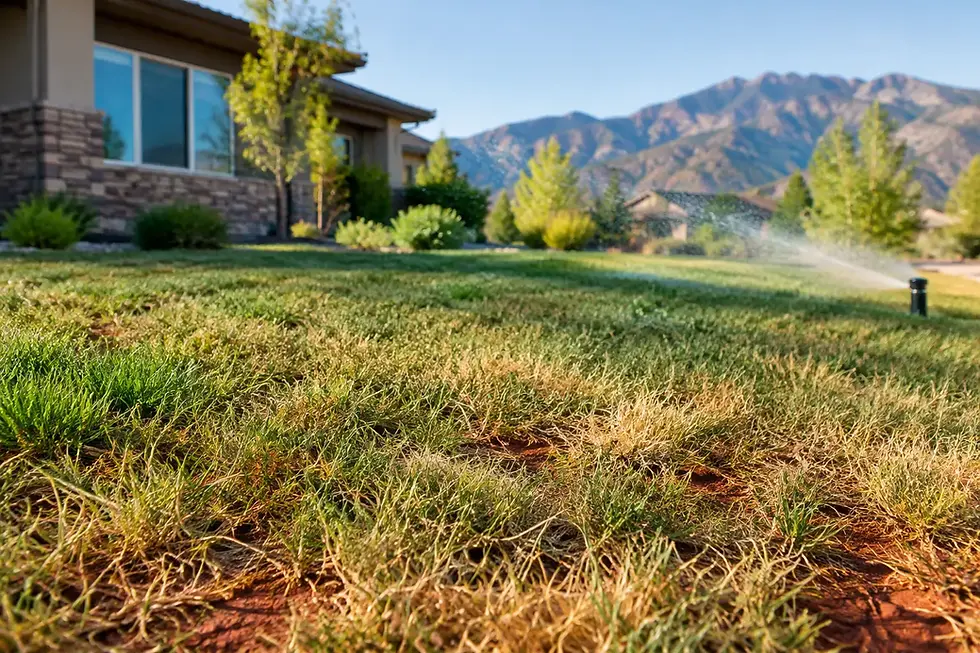
Brown grass is not automatically dead grass. Kentucky bluegrass, including the varieties in American Bluegrass™, can enter drought dormancy during prolonged heat and low moisture. Dormant bluegrass may look straw-colored above ground while crowns and roots remain alive below. When temperatures moderate and irrigation returns, it can recover.
Before tearing out a drought-stressed lawn, inspect several areas. Pull gently on brown blades. If they resist and crowns near the soil line are firm and pale rather than brittle, there may still be life worth protecting. Check whether small green shoots appear after cooler weather and consistent watering. If late-season conditions make the answer unclear, waiting for spring green-up can prevent replacing grass that would have returned on its own.
Replacement becomes more sensible when large areas pull out easily, crowns are dry and dead, soil is exposed across much of the lawn, or weeds have taken over the open space. A lawn with scattered damage and plenty of healthy grass may respond well to overseeding, improved irrigation practices, and targeted weed control. A lawn with extensive loss can require so much patching that fresh sod is the more efficient path to a uniform result.
When Seed Is the Better Establishment Choice
Seeding is usually a strong option when the lawn still has enough healthy grass to support a repair rather than a full reset. It also works well for filling smaller bare areas, renovating a lightly thinned lawn, or establishing a new lawn when the project schedule allows for several months of attentive care.
For cool-season lawns in Utah, late summer into early fall is often the friendliest seeding window. Warm soil helps germination, while cooler air reduces stress on new seedlings. Spring can work too, although young grass then faces increasing summer heat and a longer period of weed competition.
Seed needs a prepared seedbed, not a scattering on hard dirt. Loosen the top layer of soil, level it, remove debris, and make sure seed has direct soil contact. Keep the surface consistently moist with light, frequent irrigation until germination and early rooting occur. Once seedlings are up, gradually shift toward less frequent, deeper watering so roots begin following moisture downward.
The trade-off is vulnerability. A seedling lawn can fail from an uneven sprinkler pattern, a few missed hot days, washout from heavy irrigation, or traffic before it is ready. It may also take longer to achieve the dark, even appearance homeowners expect. Seeding rewards careful timing and patient maintenance, but it is not the fastest way to reclaim a lawn overtaken by bare patches and weeds.
When Sod Is the Better Establishment Choice
Sod is the right tool when coverage, erosion control, and usable results are needed now. It is especially valuable after severe drought loss, during a landscape project with a firm completion date, or where weeds have established across broad bare areas. A dense sod surface shades soil immediately and starts competing with new weed seedlings from day one.
Quality and preparation still determine success. Fresh-cut sod needs to be installed promptly on smooth, moist, prepared soil. Grade the site so water does not collect in low areas or run away from high spots. Remove persistent weeds, address compaction, and make sure irrigation reaches every section before the first roll is laid. Sod installed over poor soil preparation may look green for a short time but struggle to root uniformly.
Water is the first establishment priority. For the first days after installation, the sod and the soil beneath it need to stay moist enough for roots to knit together. Check by lifting a corner, not by guessing from the surface color. As roots begin anchoring into the soil, transition to deeper, less frequent irrigation that encourages a stronger root zone rather than shallow dependence.
Grass selection matters as well. American Bluegrass™ offers a dark blue-green color, soft texture, and the drought-dormancy resilience Kentucky bluegrass is known for. American Oasis™ turf-type tall fescue is a compelling option for homeowners who want deep roots, a uniform appearance, and strong drought tolerance. The better choice depends on sun exposure, irrigation expectations, lawn use, and the look you want around your home.
Soil Preparation Determines Both Outcomes
Whether you seed or sod, establishment begins below the surface. Healthy soil holds moisture, supplies air to roots, and lets irrigation infiltrate instead of ponding or running off. Living roots also help stabilize the soil and build the conditions that support beneficial soil organisms over time.
At All American Sod, our grass is grown in naturally occurring Ferrozite, an iron-rich, nutrient-dense silt loam that helps produce strong color and vigorous sod. Once that sod reaches your property, however, it still needs a welcoming root zone. A few inches of loosened, leveled soil and a working irrigation plan are worth far more than trying to correct poor preparation after installation.
Avoid burying sod under soil, leaving seams open, or laying rolls over dry, compacted ground. For seed, avoid planting too deeply or using so much straw, mulch, or soil cover that seedlings cannot emerge. In both cases, a soil test can be useful when growth has been consistently weak, especially if the lawn has a history of compaction, construction disturbance, or irrigation problems.
Establish for the Lawn You Want to Keep
The cheapest establishment method is not always the best value. A homeowner repairing a few thin spots may get excellent results from seed and careful watering. A property manager trying to restore a high-visibility entry after drought damage may save time and frustration with sod. Landscapers often choose sod when project timing, immediate curb appeal, and predictable coverage are part of the job.
Do not judge success solely by how green the lawn looks in week one. Watch for rooting, even moisture, fewer weeds, and growth that holds up as irrigation intervals lengthen. A dense lawn is better able to compete for light, water, and space, which makes future weed establishment more difficult. It also keeps doing the practical work a Utah landscape needs: cooling surfaces, recycling moisture through the air, slowing runoff, and protecting the soil.
If you are unsure whether your drought-stressed lawn is recoverable or ready for replacement, a closer look now can save a season of guesswork. Call All American Sod at 801-227-7800 to talk through your lawn’s condition, grass options, delivery, and installation needs.


Comments