


Why Does Sod Turn Brown? Utah Lawn Answers

A brown lawn changes more than curb appeal. When living grass loses color, the ground heats up, sheds water more quickly, and loses part of its ability to slow runoff and cycle moisture back into the air. Grass takes up water through its roots and releases it through evapotranspiration, helping cool the surrounding landscape and return moisture to the atmosphere. That water is not simply gone - it can reenter the local water cycle in days or weeks.
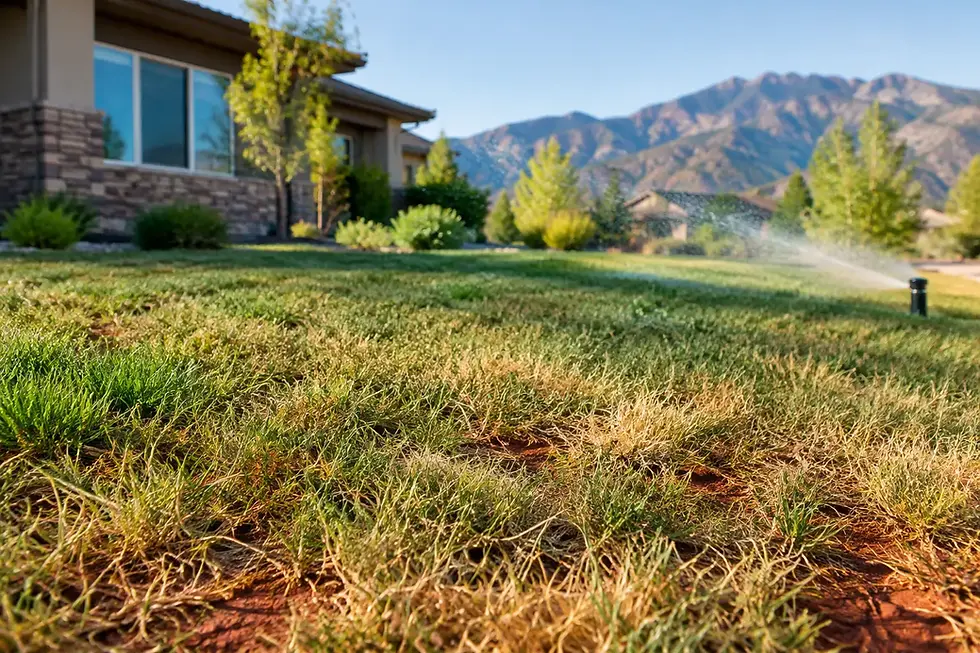
So, why does sod turn brown? In Utah, the answer is often heat and drought, but brown color can also point to shallow roots, irrigation problems, pests, disease, poor soil conditions, or a lawn that has moved beyond recoverable stress. The good news is that brown does not automatically mean dead. A careful look at the lawn, its roots, and its recent watering history will help you decide whether to restore what is there or replace the areas that have truly failed.
Why Does Sod Turn Brown During Utah Summers?
Summer heat puts pressure on every lawn, particularly where reflected heat from driveways, walls, and patios pushes temperatures even higher. Living grass cools its own leaf surface through transpiration. When soil moisture is limited, the plant closes down that process to conserve water. Leaf blades lose their green color, become dry or straw-colored, and growth slows dramatically.
Kentucky bluegrass, including bluegrass blends, is especially known for drought dormancy. Dormancy is a survival response, not necessarily a death sentence. The grass reduces activity above ground while crowns and roots wait for better conditions. With proper recovery watering and cooler weather, dormant bluegrass can often green back up.
Turf-type tall fescue responds differently. Its deeper root potential can help it remain green longer under dry conditions, but extended heat and water stress can still cause browning and thinning. The difference matters when choosing a repair strategy. A lawn with surviving crowns and a strong root system may recover well. A lawn that has lost large sections of plants will need more than extra water.
Healthy grass also serves a practical role during hot weather. Dense leaf cover can keep surfaces substantially cooler than exposed soil, gravel, or hardscape. Deep roots improve infiltration, helping water move into the soil rather than race across the surface. That is one reason we encourage Utah property owners to protect healthy lawn areas whenever possible: functional grass supports cooler, more comfortable outdoor spaces while helping the water cycle do its job.
Brown Does Not Always Mean Dead
Before replacing a brown lawn, check whether the plants are dormant or dead. Start with the tug test. Grab a small handful of brown grass and pull gently. If it remains firmly anchored, the roots may still be alive. If it lifts easily like loose thatch, the crowns and roots may have died.
Next, inspect the crown, the small growing point where leaf blades meet the roots. A living crown is often pale, creamy white, or light green inside. A dead crown is usually dry, brittle, and brown throughout. Check several locations, especially sunny areas, shaded spots, slopes, and sections near pavement. Lawn damage is rarely perfectly uniform.
A modest watering test can offer another clue. Water one small brown area deeply enough to moisten the root zone, then give it time. Do not expect overnight results. Dormant bluegrass may need several weeks of appropriate moisture and favorable temperatures before new green growth becomes obvious. If fall is approaching, cooler nights can make recovery more visible.
There is a trade-off here. Repeatedly soaking a lawn that is mostly dead can waste water and delay needed repairs. But tearing out a lawn that is simply dormant can also be expensive and unnecessary. When enough healthy grass remains, restoration is usually the smarter path.
Irrigation Mistakes That Cause Browning
Brown sod is not always caused by too little irrigation. Uneven irrigation is one of the most common reasons a lawn develops brown strips, circles, or dry corners. A sprinkler may be blocked by shrubs, tilted away from a slope, or unable to reach an area near a fence or sidewalk. Wind can also distort spray patterns during hot Utah afternoons.
Run each irrigation zone long enough to wet the root zone, then confirm that water is actually reaching the intended areas. A screwdriver or soil probe is useful here. It should move easily into moist soil after watering. If moisture only reaches the top inch or two, the lawn is being trained to develop shallow roots that dry out quickly.
Watering lightly every day may keep the surface green for a while, but it often encourages weak rooting. In established lawns, deeper and less frequent watering is generally better than frequent shallow watering, provided the soil can absorb it without runoff. Clay-heavy soils may need shorter cycle-and-soak intervals so water has time to infiltrate.
New sod is different. Freshly installed sod needs consistent moisture near the surface while roots knit into the prepared soil below. Letting new sod dry out during establishment can cause edge browning, gaps, and permanent thinning. Once it has rooted in, transition gradually toward deeper irrigation that encourages stronger roots.
Other Reasons Sod Turns Brown
Heat and drought get most of the attention, but several other issues can create similar symptoms. Dog urine often causes small brown spots with darker green growth around the edge. Fertilizer spills or overapplication can burn grass in streaks or patches. Compacted soil limits oxygen and water movement, leaving grass weak even when irrigation seems adequate.
Insects and disease can also be involved. Grubs may cause areas of lawn to pull up easily because they have eaten the roots. Billbugs, chinch bugs, and other pests can create irregular dead patches that resemble drought injury. Fungal diseases are more likely when lawns stay wet for long periods, particularly when irrigation runs at night and leaves blades damp.
Look for patterns before choosing a fix. A brown area beside hot pavement may be heat stress. A dry band that follows a sprinkler line may be coverage failure. A patch that expands despite adequate moisture may call for a closer inspection of roots, insects, or disease. Treating every brown patch as a watering problem can make the real issue worse.
When Repair Makes Sense
Repair is worth pursuing when a substantial portion of the lawn still has living crowns, rooted plants, and acceptable density. Correct the cause first, whether that means adjusting irrigation coverage, relieving compaction, reducing traffic, improving soil conditions, or addressing pests. Then give the lawn a realistic recovery window.
For thin but living areas, overseeding or targeted patch repair can help fill gaps. Bare spots should not be ignored. Open soil heats quickly, erodes more easily, and gives weeds an invitation to establish. Once weeds gain ground, they compete with recovering grass for water, nutrients, and sunlight.
A dense lawn is one of the best weed-control tools available because it occupies the space weeds need to germinate and spread. That does not mean healthy lawns never get weeds, but thick grass creates competition where bare ground creates opportunity.
When Fresh Sod Is the Better Answer
Replacement becomes practical when large sections have dead crowns, extensive bare soil, persistent weed invasion, or severe thinning that makes restoration slower and less predictable than starting over. It can also make sense after a major grading project, irrigation correction, or soil repair, when the site is ready for a clean reset.
Preparation determines whether new sod merely looks good for a few weeks or becomes a durable lawn. Remove failed vegetation and weeds, correct drainage and irrigation issues, loosen compacted areas, and grade the soil so water does not collect or run off. Fresh sod needs direct soil contact, not a layer of old debris underneath it.
Choose the grass for the site and the way the lawn will be used. Kentucky bluegrass delivers the rich color, soft feel, and spreading growth many Utah homeowners want, while drought-tolerant turf-type tall fescue can be a strong choice for properties seeking deeper roots and dependable heat performance. All American Sod grows premium fresh-cut options in iron-rich Ferrozite soil, helping homeowners begin with strong color and a foundation built for establishment.
If you are unsure whether your brown lawn can recover, take a few root samples before making a major decision. Then call All American Sod at 801-227-7800. A practical diagnosis can save a recoverable lawn, and when replacement is the right move, properly prepared fresh sod can put healthy, cooling, weed-resistant ground cover back where it belongs.


Comments