


Drought Tolerant Sod Utah Homeowners Can Trust

Utah summers do not reward a lawn that only looks good in a sprinkler schedule. Between high heat, dry winds, intense sun, clay-heavy sites, and real-life traffic from kids and pets, homeowners need drought tolerant sod Utah properties can actually live on. The goal is not a thin, survival-mode lawn. It is a dense, comfortable green space with a root system built to handle less water without giving up the look and function that make a yard worth using.
For many Utah landscapes, that means choosing the right grass before the first pallet arrives. A drought-tolerant lawn is not one that never needs water. It is one that uses water intelligently, develops deeper roots, recovers from stress, and stays useful through the heat of the season.
What Makes Sod Drought Tolerant in Utah?
Drought tolerance starts below the surface. Grass that produces a deeper, more capable root zone can reach available moisture farther down in the soil instead of depending entirely on frequent shallow irrigation. That matters in Utah, where heat can pull moisture quickly from the upper few inches of ground.
Turf-type tall fescue is a strong choice for homeowners and landscape professionals looking for that deeper-rooted performance. Its wider leaf blade, natural durability, and ability to hold color under demanding conditions make it a practical fit for many Wasatch Front and Southern Utah properties. When grown, harvested, installed, and maintained correctly, tall fescue sod can provide a richly colored lawn with a more forgiving water profile than many traditional cool-season turf options.
But variety alone is not the whole story. Sod quality, soil preparation, installation timing, irrigation design, and mowing habits all influence whether a lawn becomes water-wise or water-hungry. A drought-tolerant variety installed over compacted soil with poor sprinkler coverage will still struggle. Good turf starts with good decisions.
American Oasis: Built for Utah Heat and Water Reality
American Oasis™ is a drought-tolerant turf-type tall fescue blend selected for Utah yards that need more from their lawn. It is made for people who want green grass under bare feet, a softer play area for children, and a durable surface for pets and gatherings without treating every hot week like a lawn emergency.
The blend is designed for uniformity, rich color, and deeper rooting. Those roots do not eliminate irrigation, especially during establishment or extreme heat, but they give the grass a better opportunity to use moisture efficiently once it is established. That is a meaningful difference when water budgets, local restrictions, and summer temperatures all demand a more disciplined approach.
All American Sod Farm grows sod in naturally occurring Ferrozite, an iron-rich, nutrient-dense silt loam soil. That growing environment supports strong establishment and the darker color Utah homeowners expect from premium sod. Fresh-cut sod also matters. A lawn begins its new life the moment it is harvested, so receiving quality sod promptly and installing it without delay helps protect the investment.
Less Water Does Not Mean No Water
The phrase “drought tolerant” can create the wrong expectation. No living lawn can stay lush through a Utah summer with zero water, particularly in full sun or on hot, reflective sites near concrete, rock walls, and driveways. The better promise is this: the right sod can deliver more lawn performance per gallon when it is established and managed well.
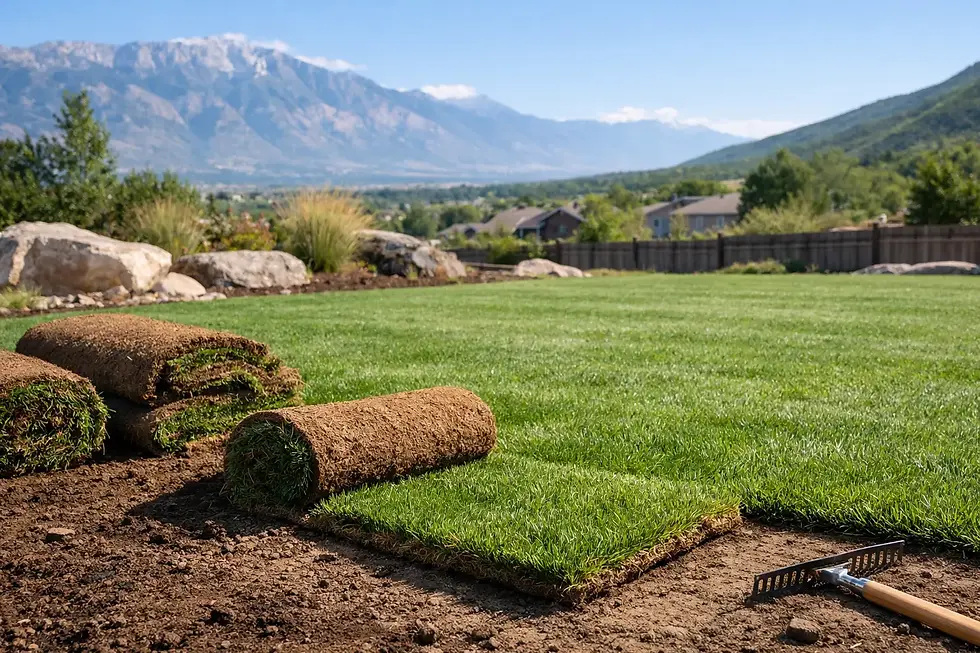
During the first few weeks after installation, new sod needs consistent moisture because its roots have not yet grown into the native soil. The sod layer and the soil beneath it should stay moist, not flooded. As roots begin to knit into the ground, watering should gradually become less frequent and deeper. That shift encourages roots to follow water downward rather than remaining near the surface.
Once established, many lawns perform best with deeper, less frequent irrigation adjusted for weather, soil type, sun exposure, and sprinkler output. A shaded Sandy backyard and a full-sun St. George front lawn should not be watered on the same schedule. Check the soil, watch the turf, and adjust instead of relying on a fixed calendar setting.
Prepare the Root Zone Before Sod Arrives
A beautiful pallet cannot solve a bad base. Before installing drought-tolerant sod, remove construction debris, loosen compacted areas, and grade the site so water does not collect against foundations or run off hard surfaces. A level, finished surface with gentle drainage makes mowing easier and helps irrigation soak in where it belongs.
Utah soil conditions vary widely. Some sites have heavy clay that holds water at the surface but can restrict rooting. Others are sandy or rocky and drain quickly. In either case, the goal is a workable root zone that accepts water and allows roots to move through it. Avoid creating a sharp layer change between imported soil and existing soil, which can interfere with drainage and root development.
Irrigation deserves the same attention. Sprinklers should provide even coverage without wasting water on sidewalks, walls, or the street. Uneven sprinkler patterns are one of the most common reasons a lawn develops dry patches even when the controller appears to be running often enough. Run a catch-can test or place several straight-sided containers across the lawn to see where coverage falls short.
Mow Higher, Water Smarter, Keep the Lawn Working
The maintenance choices after establishment are where drought tolerance becomes visible. Tall fescue generally benefits from a higher mowing height than homeowners may use on bluegrass. Keeping more leaf surface helps shade the soil, reduce evaporation, and support a stronger plant. Cutting too short removes the grass’s ability to protect itself right when summer pressure increases.
Use a sharp mower blade and avoid removing more than one-third of the leaf blade at a time. If the lawn has gotten ahead of you, raise the mower, make one pass, then lower it gradually over the next mowing. Scalping a lawn in June or July can expose soil, stress the crowns, and invite weeds into thin areas.
Fertilizer should be purposeful, not automatic. Heavy nitrogen applications during peak heat can push tender growth when the lawn is already under stress. A balanced seasonal program based on the grass type and local conditions supports color and recovery without forcing the lawn to consume more water than necessary.
Grass, Rock, and the Utah Yard You Want to Use
Utah homeowners are often told the only responsible alternative to high water use is replacing every possible square foot with rock. Rock has a place in a landscape, especially in beds, side yards, and areas where people do not need to walk or play. But a yard made entirely of hardscape can become hotter, less comfortable, and less useful for family life.
Healthy managed turf provides a cooler outdoor surface, a permeable area for water infiltration, and a real place to gather. It can also help reduce dust and soften the hard edges of a home landscape. The smarter question is not grass or no grass. It is where grass provides the most value, and which sod variety gives that area the best chance to thrive with responsible irrigation.
For a compact front yard, that may mean keeping a defined green lawn while using lower-water plantings around the perimeter. For a backyard built around children, dogs, or outdoor entertaining, a durable turf area may be the most functional feature on the property. For commercial sites, it may mean placing turf where it improves curb appeal and pedestrian comfort while reducing it in low-use zones.
When Drought-Tolerant Tall Fescue Is the Right Call
American Oasis is particularly well suited to sunny residential lawns, active backyards, park strips with proper irrigation, and commercial landscapes that need strong visual consistency. It is also a smart option for property owners who want a lawn that can better handle heat and a measured watering strategy.
There are trade-offs. Tall fescue has a different texture and growth habit than Kentucky bluegrass, and some homeowners prefer the finer feel and spreading recovery of bluegrass blends. Heavily shaded sites, poorly drained areas, and locations with severe irrigation limitations may require a more customized approach. The best sod is the one matched to the site, the intended use, and the level of care the property can realistically receive.
A lawn does not need to be oversized to make a difference. Choose quality sod for the spaces where people walk, play, relax, and cool off. Prepare the soil, install it fresh, give it a strong start, and let a deeper-rooted turf do the work it was grown to do.


Comments