


Is Kentucky Bluegrass Right for Utah's Climate?

A Utah lawn gets tested long before August. It faces drying spring winds, intense high-elevation sun, compacted new-construction soil, sudden heat, and cold winters that expose every weak spot. That is why the question is not whether a lawn can look green for a few weeks. It is whether it can become a dense, usable, beautiful surface that holds up for families, pets, play, and real Utah weather. Kentucky bluegrass Utah climate performance can be excellent, but it depends on choosing quality sod and managing the lawn like the living system it is.
Kentucky bluegrass remains one of the most recognizable and popular cool-season turfgrasses in Utah for good reason. Its dark blue-green color, fine texture, soft feel, and natural ability to spread make it a strong choice for homeowners and landscape professionals who want the classic lawn Utah neighborhoods are built around. It is not a no-water grass, and no honest turf professional should pretend otherwise. But a well-established Kentucky bluegrass lawn can use water productively, cool the landscape, filter runoff, and create the outdoor space people actually want to use.
Why Kentucky Bluegrass Fits Utah's Climate
Utah is dry, but it is not one climate. Salt Lake Valley, Utah County, Cache Valley, the Wasatch Back, Central Utah, and St. George each bring different elevations, summer temperatures, soils, and irrigation realities. Kentucky bluegrass is generally best suited to Northern and Central Utah, where cold winters and warm summers match its cool-season growth pattern. It greens up strongly in spring, grows steadily through early summer, and recovers quickly when cooler fall weather returns.
The quality people notice most is its self-repairing growth habit. Kentucky bluegrass spreads through underground stems called rhizomes. When children wear down a path, a dog creates a favorite running route, or a mower scalps a small area, a healthy bluegrass lawn has a better chance of knitting itself back together than bunch-type grasses. That density also helps reduce open soil, mud, weeds, and the worn-out look that can make a yard feel unfinished.
Color matters, too. A quality Kentucky bluegrass blend creates the deep blue-green appearance many property owners want without relying on temporary colorants or a fragile, thin turf stand. At All American Sod Farm, American Bluegrass is grown for that dense, rich look, beginning in naturally occurring Ferrozite soil. That iron-rich, nutrient-dense silt loam supports strong sod before it ever reaches your project, giving the lawn a far better starting point than weak or poorly rooted material.
The Utah Heat Trade-Off
Kentucky bluegrass is not invincible. During a hot, dry Utah summer, especially when temperatures stay high overnight, it can slow down or enter stress. That does not automatically mean the grass is dead. Cool-season turf often protects itself by reducing growth when heat and moisture demands increase. The difference between temporary stress and real damage usually comes down to root depth, irrigation consistency, mowing practices, and soil conditions.
This is where Utah homeowners can get frustrated. They may water lightly every day, see green grass near the surface, and assume the lawn is healthy. In reality, shallow daily watering often encourages shallow roots. Then a July heat spell arrives, and the lawn has no reserve. A deeper, less frequent watering approach is generally better for established bluegrass because it encourages roots to follow moisture farther into the soil profile.
There is no single irrigation schedule for every yard. A shady lawn in Sandy needs something different from an exposed south-facing yard in Lehi, and a lawn on heavy clay behaves differently than one on sandy fill soil. Watch the root zone, not just the calendar. If footprints remain visible, leaf blades fold lengthwise, or the lawn develops a dull blue-gray cast, it may be telling you it needs water. Apply enough water to moisten the active root zone, then allow the surface to dry somewhat before the next cycle.
In Southern Utah, Kentucky bluegrass can still be used, particularly in higher-care landscapes, but the heat and water demand deserve a more direct conversation. A drought-tolerant turf-type tall fescue blend may be the smarter choice for some St. George properties, large sunny areas, or owners seeking deeper roots and lower irrigation pressure. The best lawn is not the one with the lowest theoretical water use. It is the one that fits the site, performs for the people using it, and is managed responsibly.
Start With Sod That Can Establish Fast
Utah soil is often the real obstacle. New homes may have compacted subsoil, construction debris, poor grading, or a thin layer of imported topsoil that dries out quickly. Kentucky bluegrass can overcome a lot after establishment, but it should not be expected to solve a bad base by itself.
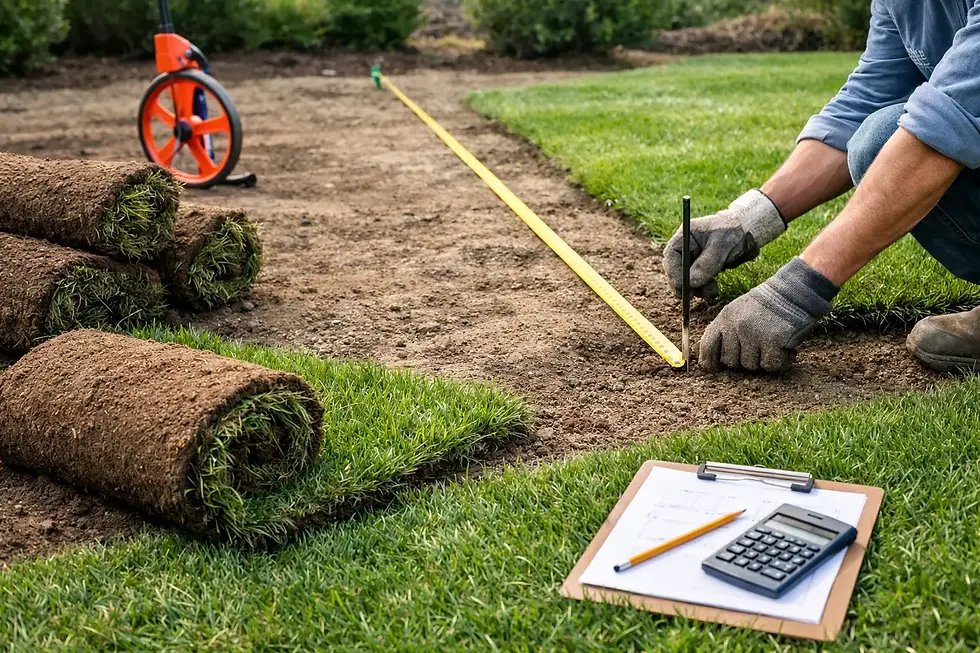
Before installation, clear rocks, roots, and debris, then correct low spots and drainage issues. Grade the area so water moves away from foundations without rushing off the lawn. Loosen compacted soil where practical and incorporate appropriate topsoil or organic matter if the existing soil is severely depleted. The goal is not fluffy soil that settles later. It is a level, firm root zone that can hold moisture, exchange air, and let new roots move down.
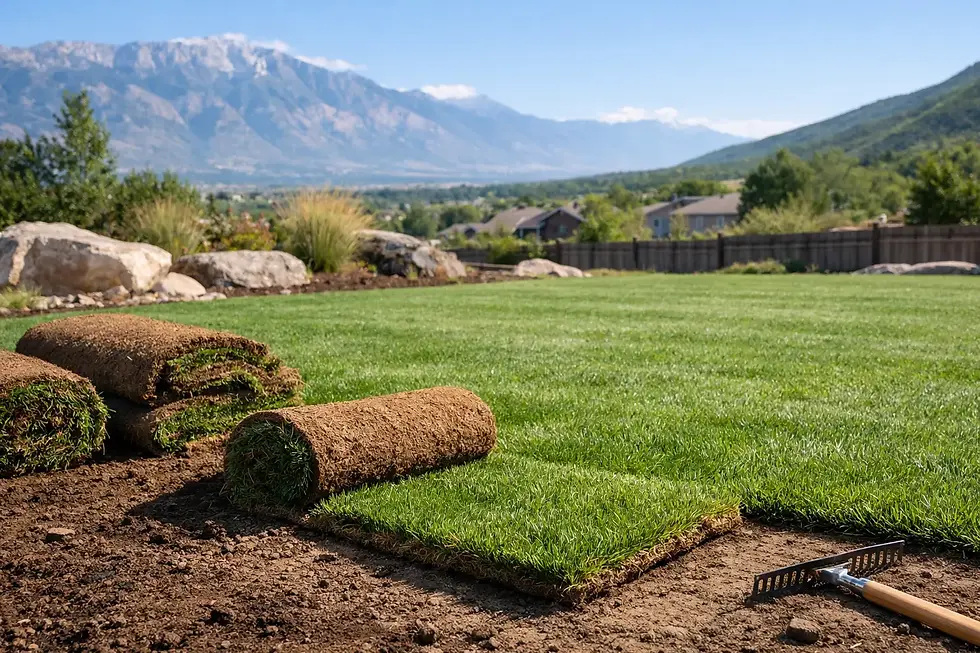
Fresh-cut sod changes the equation because it gives you mature turf coverage immediately. Instead of waiting for seed to germinate through wind, weeds, and uneven spring weather, you begin with a connected turf surface. Lay sod tightly in a staggered brick pattern, keep pieces moist during installation, and avoid leaving seams exposed to dry out. Roll the finished area lightly enough to ensure soil contact, then begin watering promptly.
For the first couple of weeks, the sod layer and the soil beneath it must stay consistently moist while roots cross the interface. This is not the time for deep, infrequent irrigation. Once the sod resists a gentle lift and begins rooting into the prepared soil, gradually transition to longer, less frequent watering cycles. That transition is one of the most important steps in creating a lawn that can handle Utah summer conditions.
Kentucky Bluegrass Care That Builds Resilience
Mowing is one of the simplest ways to either help or hurt bluegrass. Keep the lawn around 2.5 to 3.5 inches for most Utah conditions, leaning a little higher during heat. Taller leaf blades shade the soil, reduce evaporation, and support deeper roots. Never remove more than one-third of the blade length in a single mowing. If the lawn got away from you during a busy week, lower it gradually over multiple mowings rather than cutting it down hard all at once.
Fertilizer should support the lawn, not force a burst of weak growth. Kentucky bluegrass responds well to thoughtful nutrition, especially in the active spring and fall growing periods. Too much quick nitrogen during peak summer heat can increase stress, create excess growth, and demand more water. A soil test is useful when lawns repeatedly thin out, discolor, or struggle despite regular care. It reveals whether the issue is nutrient availability, pH, compaction, salinity, or something else that watering alone cannot fix.
Aeration can also make a major difference in Utah's compacted soils. When water puddles, irrigation runs off, or turf feels hard underfoot, core aeration opens channels for air, moisture, and roots. Fall is often an excellent time for this work because Kentucky bluegrass is entering a strong recovery period. Pairing aeration with responsible overseeding where needed can improve older lawns without starting from scratch.
When Kentucky Bluegrass Is the Right Call
Choose Kentucky bluegrass when you want a traditional, soft, dense lawn with exceptional visual appeal and good recovery from everyday traffic. It is especially compelling for family yards, front lawns, parks, school grounds, and properties where curb appeal matters as much as function. A managed lawn is not wasted space. It is a cooling, living landscape that creates room for people while contributing to infiltration and a healthier local water cycle.
If your site has extreme heat exposure, limited irrigation capacity, or a goal of reducing water use in a large turf area, consider placing bluegrass where it delivers the most value: play zones, front-entry views, gathering spaces, and the areas you use every day. Then choose the right plant material for the tougher edges of the property. Smart Utah landscaping is not rock everywhere or turf everywhere. It is putting the right living surface in the right place.
A beautiful bluegrass lawn is built from the ground up: good soil, fresh sod, deep roots, and care that responds to the season. Give it those fundamentals, and your yard can do more than survive Utah's climate. It can become the cool, durable green space your home has been missing.

Comments