


Smart Irrigation for Utah Lawns That Last

A Utah lawn can look great on Monday and show heat stress by Friday when irrigation is set on autopilot and forgotten. Smart irrigation gives homeowners and landscape professionals a better way to manage water: not by starving the lawn, but by applying the right amount at the right time and getting it into the root zone.
That distinction matters. A healthy green lawn is a usable family space, a cooling surface around the home, and a living part of the local water cycle. The goal is not to run sprinklers less just for the sake of running them less. The goal is to waste less water while maintaining deep roots, dense color, and the kind of lawn that can handle kids, pets, heat, and daily use.
What Smart Irrigation Actually Means
Smart irrigation is a system that adjusts watering decisions based on real conditions rather than a fixed schedule that runs unchanged from spring through fall. It may include a Wi-Fi controller, weather data, a rain or freeze sensor, a soil-moisture sensor, or simply better programming based on sun exposure, soil type, sprinkler performance, and the season.
A smart controller can account for changes in evapotranspiration, often called ET. ET is the combined water loss from soil evaporation and plant transpiration. When Utah temperatures climb, days stretch long, and dry wind moves across a property, ET rises. When a cool front comes through or rain reaches the lawn, irrigation demand drops.
That is useful information, but it is not a permission slip to let an app make every decision. Weather-based technology is only as good as the system it controls. If sprinklers throw onto pavement, heads are mismatched, or compacted soil sheds water before it can soak in, a smart controller cannot fix the underlying problem.
Start With the Watering System, Not the App
Before upgrading a controller, inspect what happens when each zone runs. Watch it in daylight. A few minutes of observation can reveal problems that have been quietly wasting water for years.
Look for broken heads, clogged nozzles, tilted spray patterns, and water reaching sidewalks or driveways. Check whether the sprinklers in a zone are the same type and have similar precipitation rates. Rotor heads and spray heads should not share the same zone because they apply water at very different rates.
Coverage matters just as much as technology. A lawn needs head-to-head coverage, meaning one sprinkler should generally reach the next sprinkler. Dry edges, pale strips, and stressed corners are often coverage problems, not a sign that the entire lawn needs longer run times.
For slopes and heavy or compacted ground, use cycle-and-soak watering. Instead of one long run that creates runoff, break the schedule into shorter cycles with time between them. The first cycle moistens the surface. The pause allows water to infiltrate. The next cycle pushes moisture deeper, where roots can use it.
This approach is especially valuable on Utah properties with grades, clay-heavy areas, or spots affected by construction traffic. Water running down the gutter is not evidence that a lawn has been watered well. It is evidence that water missed the root zone.
Set Smart Irrigation Zones Around Real Conditions
One setting rarely fits an entire property. South-facing areas, sidewalks, driveways, retaining walls, and reflected heat can create hotter, drier zones. Shaded areas and protected side yards may require much less water. A single schedule for both usually means one area is overwatered while another struggles.
Separate zones by plant type and exposure whenever possible. Lawns should not share a schedule with beds, shrubs, or trees. Their root systems and watering needs are different. A deep-rooted tree may need slower, deeper irrigation less often, while a newly planted flower bed needs more frequent attention near the surface.
Within a lawn, adjust runtime by zone if exposure varies. A sunny front yard may need a different schedule than a shaded backyard. This is where a smart controller earns its place: it makes adjustments easier and more consistent without requiring a complete redesign of the irrigation system.
Still, do not program by minutes alone. The number of minutes that works on one property may be completely wrong on another. Sprinkler output, soil texture, slope, and pressure all change how much water actually reaches the ground.
Use a Simple Catch-Can Test
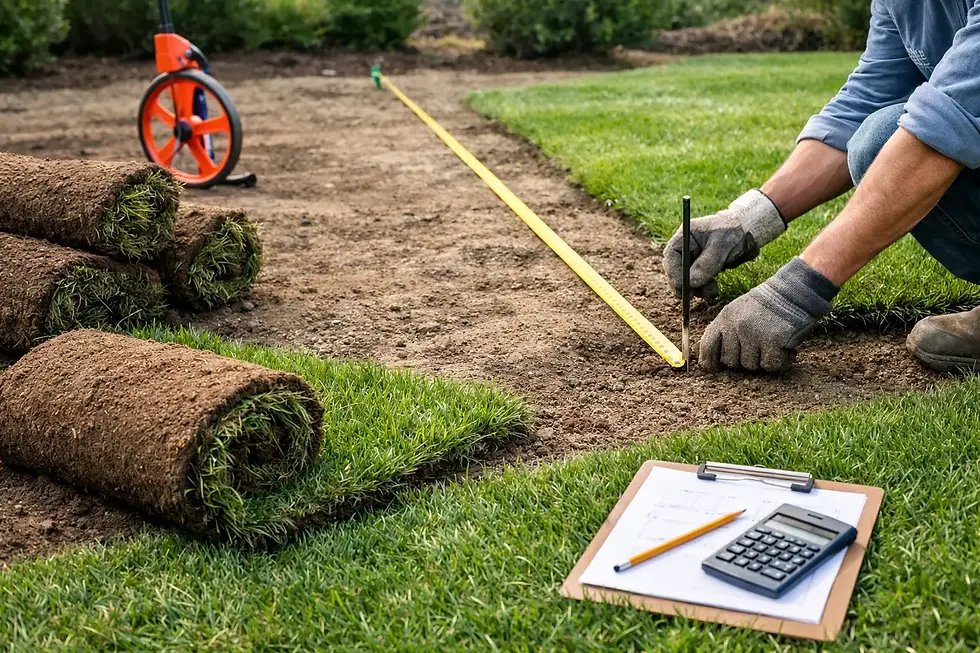
Place several straight-sided containers around a zone and run the sprinklers for a set amount of time. Measure the water in each container. This shows the zone's average precipitation rate and, just as importantly, whether coverage is uneven.
If one area gets twice as much water as another, increasing the runtime only compounds the problem. Correct the heads, nozzles, pressure, or spacing first. Once the system applies water evenly, smart scheduling becomes far more effective.
Build Deep Roots Instead of Chasing Surface Green
The strongest lawns are not maintained by daily light watering. Frequent shallow watering keeps roots close to the surface, where summer heat dries the soil quickly. Deep, well-timed watering encourages roots to grow downward, improving resilience between irrigation cycles.
American Oasis, a turf-type tall fescue blend, is selected for deep roots and drought tolerance. American Bluegrass brings the dense, dark blue-green color and soft texture many Utah homeowners want. Both perform best when irrigation supports root development rather than creating a constantly wet surface.
That does not mean every lawn should follow the same interval. Sandy soil drains quickly and may need shorter, more frequent cycles. Fine-textured soil can hold water longer but may absorb it slowly. A newly installed lawn has different needs than an established lawn, too.
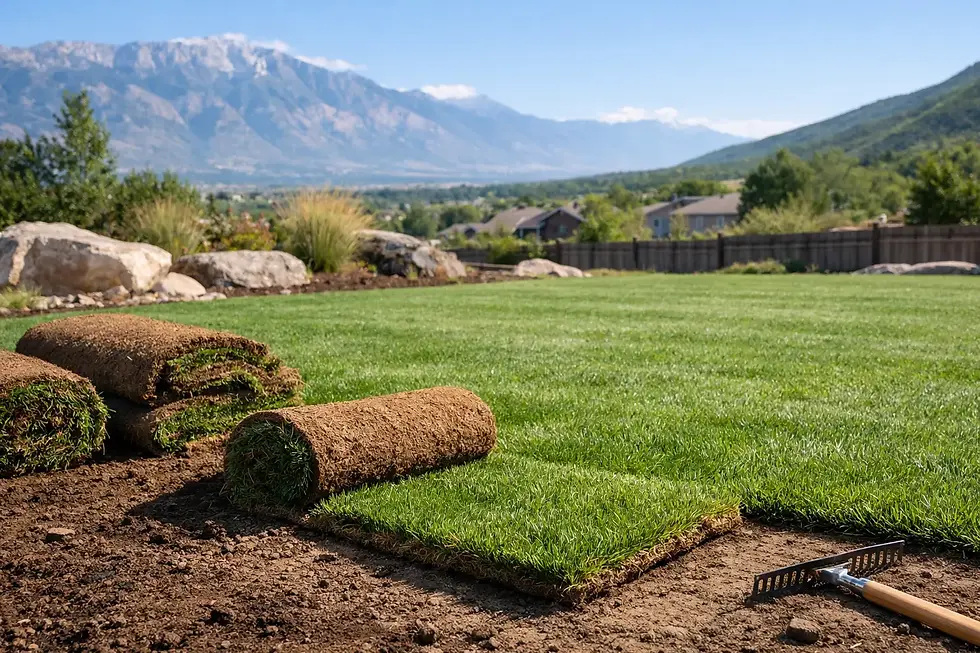
Fresh sod requires consistent moisture during establishment because its roots must knit into the native soil below. Smart irrigation during this period means monitoring the soil under the sod and tapering frequency as roots establish. It does not mean relying on a standard established-lawn schedule from day one.
Once established, the best check is physical: push a screwdriver or soil probe into the ground after watering. If moisture is only reaching the top inch or two, the lawn is being managed for appearance at the surface, not long-term strength below it.
Use Sensors as Guardrails, Not Guesswork
Rain sensors prevent irrigation from running during or immediately after precipitation. Freeze sensors help avoid watering during conditions that can create ice and damage. Soil-moisture sensors can be especially useful when placed correctly in representative areas of the root zone.
No sensor is perfect. A sensor installed in a shaded, damp corner may tell the controller to skip watering while the sunny portion of the lawn is drying out. Weather stations can also differ from the microclimate around a home, especially near hot pavement, walls, or exposed hillsides.
The practical answer is to use technology as a guardrail and keep walking the property. Watch for footprints that remain visible in the lawn, a blue-gray cast to the leaf blades, dry edges, or uneven color. Those are signals to investigate, not automatic proof that the entire system needs more water.
Change the Schedule Through the Season
A fixed July schedule should not run in May, September, or after a week of meaningful rainfall. Smart irrigation works best when it changes with the season.
In spring, start conservatively. Cool temperatures and spring moisture often reduce demand, while excessive watering can encourage shallow roots and soft growth. Increase gradually as heat and ET rise. During the hottest stretch of summer, water early in the morning so more moisture enters the soil before heat and wind increase evaporation.
In fall, reduce irrigation as nights cool and growth slows, but do not shut water off too early. A healthy lawn heading into winter is better prepared for next year's heat. Winterization should include shutting down and protecting the irrigation system before freezing conditions create costly damage.
For commercial properties and landscape crews, this seasonal discipline is where smart irrigation can protect both appearance and operating costs. A well-programmed system reduces needless site visits caused by dry spots, runoff complaints, or overwatered areas, but crews still need to inspect stations and make field adjustments.
Smart Water Use Supports a Better Utah Landscape
Water stewardship does not require giving up the benefits of a living lawn. Healthy managed lawns cool the space around them, filter dust, support infiltration, and provide a place where families can actually gather and play. The answer is to plant progress: choose quality living sod, build healthy soil, and irrigate with purpose.
All American Sod Farm has seen across Utah that great lawn performance begins with quality sod and continues with practical care. Sod grown in naturally occurring Ferrozite soil arrives with the foundation for strong establishment, rich color, and resilient growth, but it still needs water delivered correctly after installation.
If your lawn has recurring dry spots, runoff, weak roots, or a controller that has not been touched in years, start with an irrigation audit before adding more water. For help planning sod, installation, or a lawn built for Utah conditions, call 801-227-7800. A smarter watering plan should leave you with more than a lower irrigation bill - it should leave you with a lawn that looks and lives better.

Comments