


Best Grass for Dogs: 2 Utah Sod Choices

A dog does not care whether your lawn is a showcase variety or a contractor-grade blend. Your dog cares about a cool place to land after a sprint, a soft surface under its paws, and enough open green space to run the same route 40 times a day. For Utah homeowners, choosing the best grass for dogs means finding turf that can recover from traffic, handle summer heat, and still look like a lawn worth coming home to.
That rules out the idea that rock, bare soil, or artificial turf is automatically the easy answer. Rock gets hot, collects waste, and gives dogs no comfortable place to play. Artificial turf can hold significant surface heat in full sun and does not provide the cooling, infiltration, or living root zone of a healthy lawn. A well-managed sod lawn gives families and pets a durable, usable outdoor surface while helping cool the space around the home.
What Makes Grass Dog-Friendly?
The toughest dog lawns are not simply the ones with the coarsest blades. A dog-friendly lawn needs density, recovery potential, a strong root system, and enough resilience to withstand regular use. It also needs to match the property. A small shaded yard with one senior dog has different demands than a sunny Saratoga Springs backyard with two active retrievers and kids playing soccer.
Dog traffic usually shows up in predictable places: the fence line, the path from the back door to the gate, the area around a favorite window, and the launch zone where a dog takes off after a ball. Grass in those spots needs to either spread and repair itself or develop roots deep enough to hold the soil together under repeated pressure.
Urine spots are a separate issue. They are usually caused by a concentrated dose of nitrogen and salts, not because a grass variety is inherently bad for dogs. Any lawn can develop brown spots when the same area is used repeatedly. The right turf can recover better, but watering habits, dog routines, and prompt cleanup matter just as much.
The Best Grass for Dogs in Utah
For most Utah dog owners, the strongest choices are Kentucky bluegrass blends and turf-type tall fescue blends. Both create real, functional lawns. The better option depends on how much foot traffic the yard receives, how much water you can apply, and whether you prioritize self-repair or deeper roots and heat tolerance.
Kentucky Bluegrass for Softness and Recovery
Kentucky bluegrass is a favorite for a reason. It creates the dense, dark-green, soft lawn many homeowners picture when they want a beautiful family yard. It spreads through underground stems called rhizomes, which gives it a meaningful advantage in a dog yard: it can gradually fill thin areas and recover from moderate wear.
That self-repair ability is valuable when dogs create worn paths or when kids and pets use the lawn daily. A quality Kentucky bluegrass blend also provides a comfortable surface for paws, play, and bare feet. For a homeowner who wants a classic Utah lawn with rich color and a refined texture, bluegrass is often the first choice.
The trade-off is water. Bluegrass needs consistent irrigation to stay actively growing and attractive through Utah heat. It is not a plant-it-and-forget-it lawn, especially in exposed, south-facing yards. Proper irrigation, seasonal adjustments, and mowing at a healthy height make the difference between bluegrass that recovers and bluegrass that gets stressed under dog traffic.
American Bluegrass™ is built around that performance profile: dense, dark blue-green color, soft texture, and a strong ability to establish into a usable lawn. It is especially well suited to homes where the lawn is part of family life, not just something viewed from the sidewalk.
Turf-Type Tall Fescue for Heat and Deep Roots
Turf-type tall fescue is an excellent answer for dog owners who need toughness in a hotter, drier, or more demanding part of the yard. Its deeper root system helps it reach moisture lower in the root zone, and its heat tolerance can be a real advantage in sunny Utah landscapes. Modern turf-type tall fescue blends also offer far better color and uniformity than the rough, clumpy fescue many people remember.
For a large dog, a sunny run area, or a backyard with heavy daily use, tall fescue can hold up exceptionally well when it is watered and mowed correctly. Its blades are typically a little broader than Kentucky bluegrass, but quality turf-type varieties still create a full, attractive lawn with a comfortable feel underfoot.
The main trade-off is repair style. Tall fescue grows in bunches rather than spreading aggressively through rhizomes. It can withstand stress well, but it will not knit damaged areas back together as quickly as bluegrass. If a dog repeatedly wears out one narrow track, that section may need occasional overseeding or a fresh sod repair.
American Oasis™ is a drought-tolerant turf-type tall fescue blend selected for deep roots, rich color, and uniform performance. It is a smart choice for homeowners who want a greener yard with less stress during dry stretches without settling for a lifeless landscape.
How to Choose Between Bluegrass and Tall Fescue
Choose Kentucky bluegrass when your highest priorities are softness, dense color, and the ability to recover from everyday play. It is often the better fit for regularly irrigated family lawns, moderate dog traffic, and homeowners who want that classic dark-green Utah sod look.
Choose turf-type tall fescue when the yard is hot, exposed, heavily used, or managed with water efficiency in mind. It is a particularly practical choice for larger dogs, active backyards, and areas where a deep-rooted turf stand can help keep the lawn stable through summer conditions.
There is no one variety that makes urine spots disappear or survives neglect. The best grass is the one matched to the site and maintained like a living landscape. Healthy turf is far more resilient than turf that is scalped, underwatered, compacted, or forced to compete with bare soil.
Make Any Dog Lawn Last Longer
A few practical habits protect your investment more than constantly replacing damaged grass. Keep the mower height high enough to support a deeper root system. For most home lawns, cutting too short is one of the fastest ways to weaken turf before dogs ever step on it. Taller grass shades the soil, holds moisture longer, and gives roots more energy to recover.
Water deeply enough to encourage roots to grow down rather than staying near the surface. Frequent, shallow watering can create a weak root zone that struggles in heat and traffic. Your irrigation schedule should change with the season, soil type, sun exposure, and local watering guidelines. A shaded yard in Draper will not need the same schedule as a full-sun yard in St. George.
If your dog consistently uses one spot, create a second destination. Move a water bowl, add a shaded resting area, or vary where you throw a ball. Even small changes can break up repetitive traffic patterns. Where urine spots appear, a quick rinse with water after the dog finishes can dilute the concentration before it burns the leaf tissue and soil.
Keep waste picked up promptly. Beyond the obvious cleanliness benefit, regular cleanup helps protect the lawn surface and makes it easier to spot thin areas before they become bare patches. If a run lane starts to wear down, repair it early with matching sod rather than waiting for weeds and compaction to take over.
Start With Fresh, Locally Grown Sod
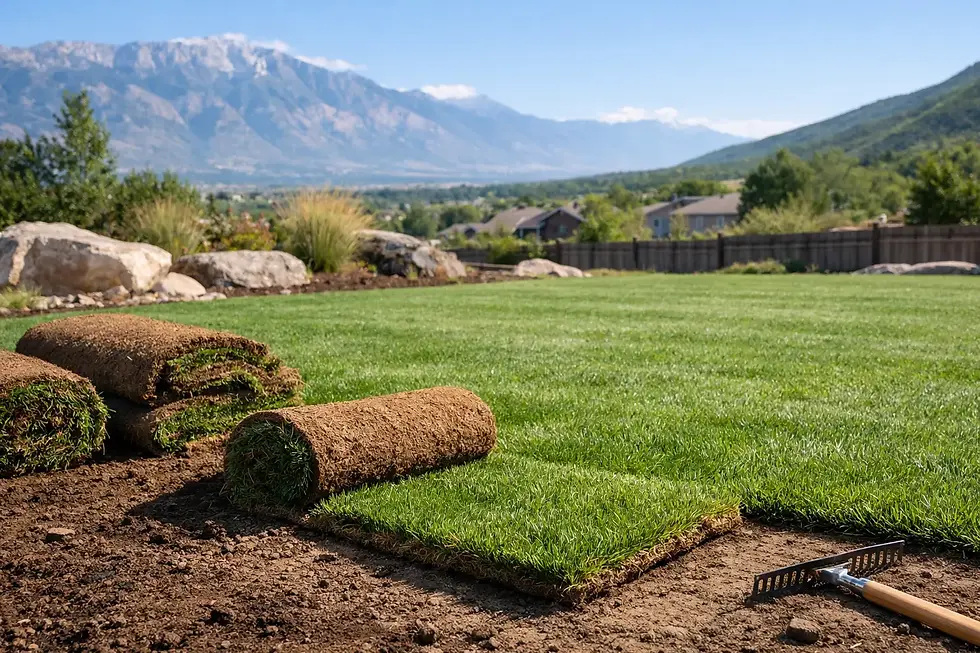
Dog lawns need a strong start. Fresh-cut sod establishes faster than a thin seedling lawn and gives dogs a usable green surface much sooner once roots have taken hold. Good soil beneath the sod matters too. Sod grown in nutrient-dense, iron-rich Ferrozite soil carries the foundation for stronger establishment, deeper color, and a more resilient lawn.
At All American Sod Farm, the goal is not to sell a generic patch of green. It is to provide Utah-grown turf that can perform through real heat, real family use, and real dog traffic. Whether you choose bluegrass or turf-type tall fescue, installation timing and early watering are critical. Give new sod time to root before turning the backyard loose for full-speed play.
A dog should not force you to choose between a beautiful lawn and a usable yard. Plant the turf that fits your sun, soil, water plan, and household habits, then give it the care a living lawn deserves. The result is more than curb appeal - it is a cooler, softer place for the whole family to spend time outside.


Comments